7 Common Rotary Washing Line Problems (with Solutions)
Rotary washing lines are very useful, but sometimes they can have problems that make them hard to use. In this article, we only explain the most common problems and their easy solutions. for more details check rotary washing lines.
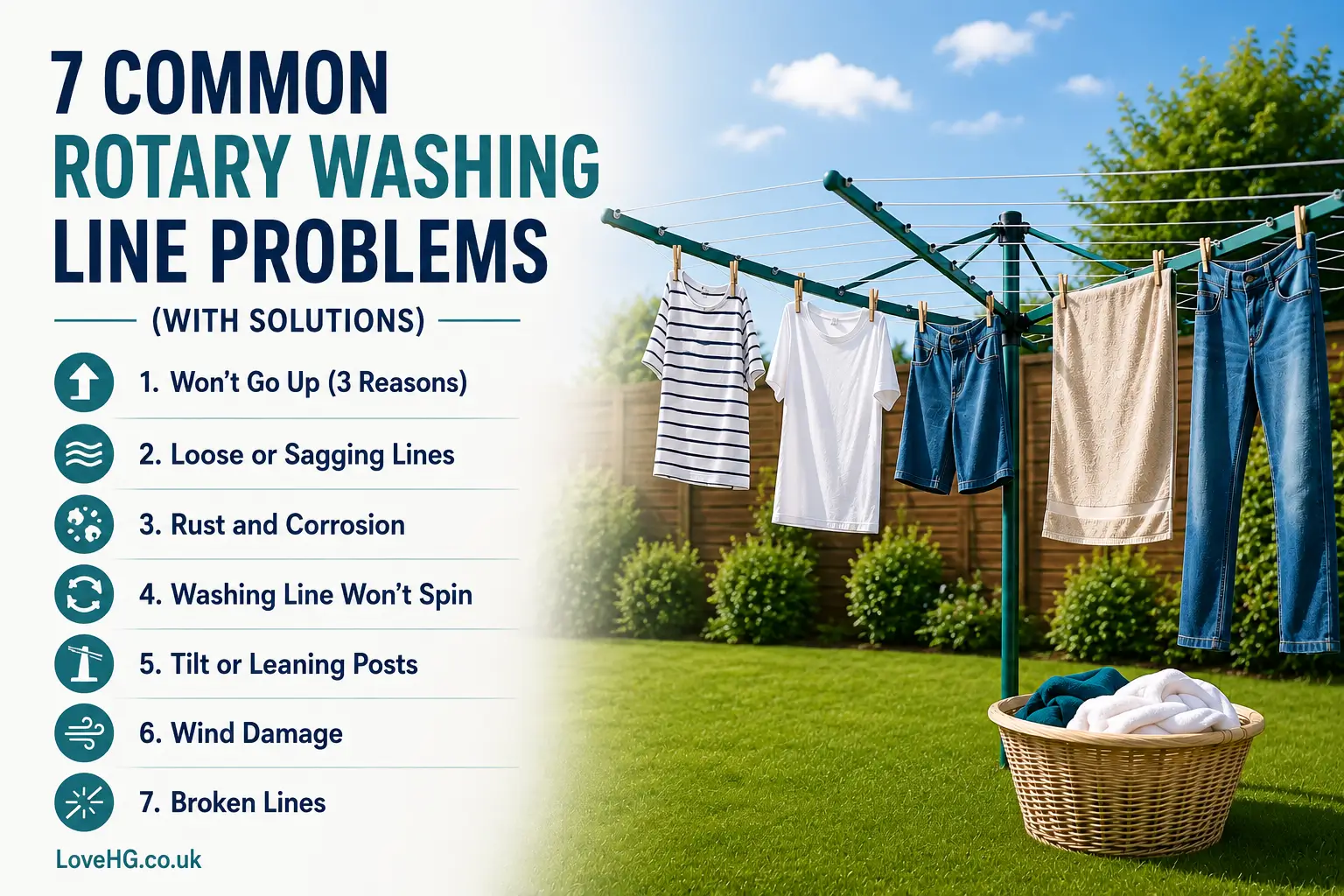
Here are the only 7 common problems with solutions to help you keep your washing line working properly.
Problem 1: Rotary Washing Line Won’t Go Up (3 Reason with Solutions)
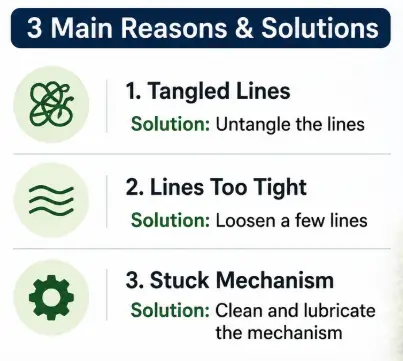
A rotary washing line may not go up because of a few common problems. Most of the time, the lines are tangled, pulled too tight, or the centre mechanism is stuck.
These issues stop the arms from opening properly. The good news is that all of these problems are easy to fix at home with basic checks and cleaning.
Here are the solutions below.
A. Tangled Lines
The most common problem is that the lines get tangled or looped around the arms of the washing line. When this happens, the line cannot open properly.
Solution: Open the washing line as far as it will go and lock it in that position. Then check all the arms and remove any lines that are wrapped or twisted around them. Make sure no lines are caught on any arm. After untangling all the lines, open the washing line fully—it should open correctly now.
B. Lines Too Tight
Sometimes the rotary washing line will not open fully because the lines are pulled too tight. When the lines are too tight, they put pressure on the arms and stop the washing line from opening properly.
Solution: Open the washing line as much as possible and lock it in that position. Then loosen a few lines slightly so they are not over-tight. After that, try opening the washing line again. Once it opens easily, adjust all the lines evenly so they are tight enough to hold clothes but not so tight that they stop the line from opening.
C. Stuck Mechanism
The centre hub or locking mechanism can get stuck because of dust, dirt, or rust. When this happens, the line cannot spin or fold out.
Solution: Clean the mechanism carefully and remove any dirt or rust. Add a little oil or lubricant to help it move smoothly. Make sure nothing is blocking the moving parts.
Problem 2: Loose or Sagging Lines
One of the most common problems with rotary washing lines is that the lines start to sag. This usually happens when the line is old, stretched, or holds too many heavy, wet clothes. When the line sags, clothes can touch the ground and get dirty again. To prevent this, it is important to check the line tension regularly and tighten it whenever needed.
To fix a sagging line, first take all the clothes off and make sure the posts are strong and stable. Start with the first line and pull it tight, fastening it so it stays straight. Then do the next line above it the same way, pulling it tight and straight. Keep doing this for all the lines, one by one, until you reach the last line at the top. When you tighten the last line, make sure it is firm, and all the other lines below are still straight.
Finally, check all the lines by pressing gently in the middle to make sure none are sagging, and adjust if needed. Doing it this way keeps all the lines tight and your clothes safe from touching the ground.
Problem 3: Rust and Corrosion
The metal parts of a rotary washing line can start to rust after some time, especially if it is left outside in rain or wet weather. Rust makes the line weak and harder to use. To protect your washing line, you can do the following:
- Choose a line made of stainless steel or with a rust-resistant coating.
- Clean the metal parts from time to time and dry them if they get wet.
- Use a rotary washing line cover with zip when the line is not in use. It helps keep the washing line dry and protects it from rust.
- Consider buying a strong plastic washing line, which does not rust and can last for many years.
Problem 4: Washing Line Won’t Spin
The part of the line that lets it spin can become stiff or stop turning. Dust, dirt, or rust can get inside and make it hard to move. When this happens, hanging or taking down clothes becomes difficult.
To fix this, clean the moving parts carefully and add a little oil or lubricant. This will make the line spin smoothly again.
Problem 5: Tilt or Leaning Posts
Sometimes the main post of a rotary washing line can start to lean or wobble. This usually happens if it is not installed properly in the ground. Many people make the mistake of setting the post without using a water level. At first, it may look straight, but later it can tilt or lean.
To avoid this problem, always use a water level when installing the post to make sure it is completely upright. The post should be placed in firm soil, and for soft or loose ground, must use concrete or strong supports.
Problem 6: Wind Damage
Strong winds can damage a rotary washing line. The lines may twist, bend, or even break, and your clothes can fall off. To protect your line, do not hang laundry outside when very strong winds are expected.
If your rotary line can be lowered, bring it down, and if it is a removable type, it is best to take the whole line out during heavy winds. Check our types of rotary washing line article if you don’t know about removable rotary washing lines. Always check the line regularly for any damage, especially after windy weather. Using these steps can keep your washing line safe and your clothes secure.
Problem 7: Broken Lines
A broken line is usually not a big problem because most rotary washing lines are made with strong lines that do not break easily. However, if the line is very old, worn out, or holding too many heavy, wet clothes, it can snap. The good thing is that you only need to replace the line itself, you don’t need to replace the whole washing line. Replacing a broken line is usually simple and not expensive.
Conclusion:
Rotary washing lines are a great way to dry clothes, but like any tool, problems can come up, and we need to find the solution and fix them. Common issues like tangles, sagging, rust, or a stuck mechanism are usually easy to solve at home with a little care.
By checking the lines regularly, keeping them tight, cleaning metal parts, and protecting your line from strong winds, you can keep it working smoothly and make it last for years. If you are looking for a new one, check our guide to the best rotary washing lines to help you choose the right option.