Who Invented The Rotary Washing Line?
The Rotary Washing Line also known as, Hills Hoist is often the first name Australians think of when they hear rotary clothes hoists. In contrast, the story has a different picture when its history stretches back much further.
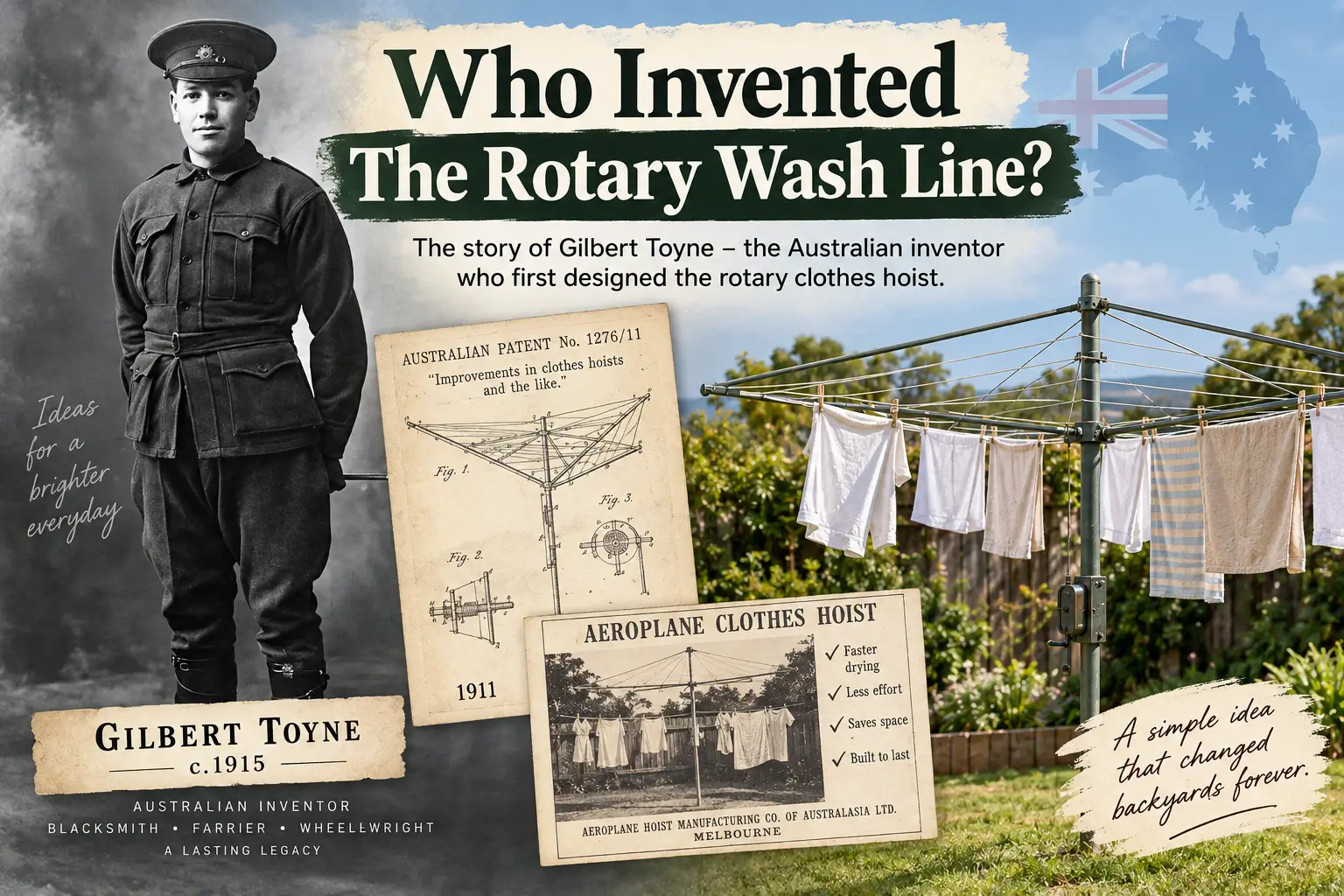
Australian blacksmith Gilbert Toyne originally developed, patented, and sold his own rotary clothes hoist well before the Hills Hoist became a famous backyard staple.
Toyne’s initial work and innovations helped in the development of rotary clothes hoist designs that later became a familiar sight in Australian homes.
You May Like: Best Rotary Washing Line in UK
Who Was Gilbert Toyne?
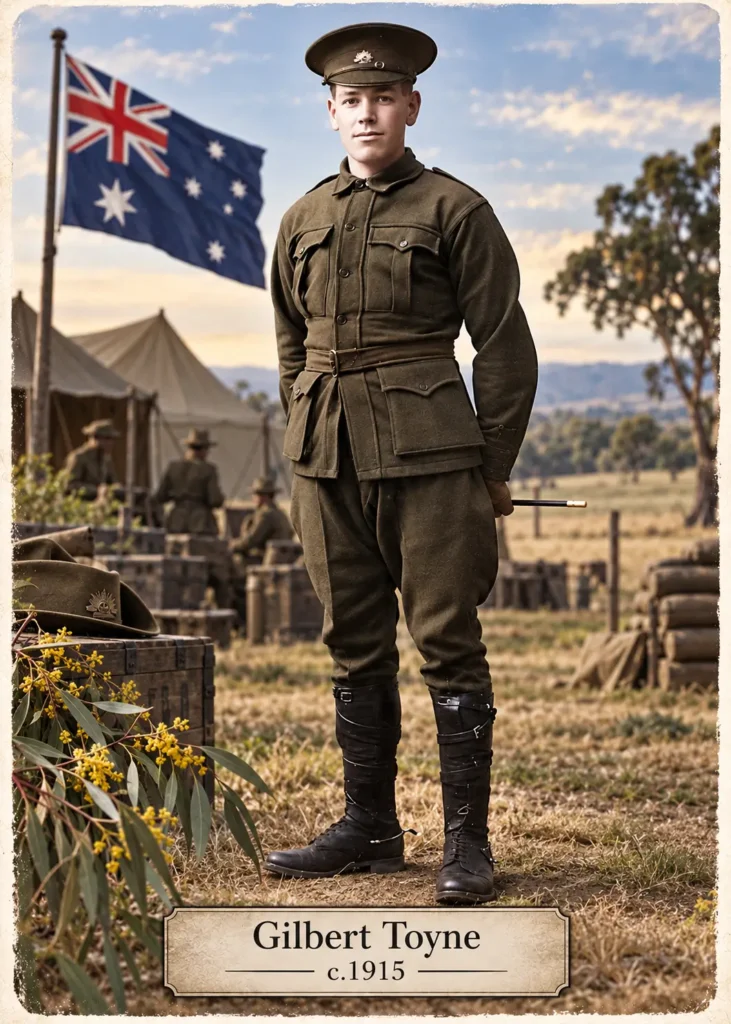
Gilbert Toyne was an Australian blacksmith, inventor and businessman who became an early pioneer of rotary washing line.
Gilbert Toyne was born on August 23, 1888, in Darriwill, Victoria, Australia. He was a trained blacksmith, farrier, and wheelwright, giving him strong practical skills in metalworking, mechanics, and construction.
These skills helped Toyne develop his own design for a rotary clothes hoist. He later patented and sold his design, making him an important early figure in the development of rotary clothes hoists in Australia.
You May Like: 8 Best Rotary Washing Line Spikes in UK
Why Did Toyne Invent The Rotary Clothes Hoist?
Toyne’s idea for improving the clothesline came from his own family life. He had a big family, meaning his family had a large amount of laundry to deal with. This encouraged him to find and make a more practical way to hang and dry clothes. Gilbert saw it as an opportunity to solve this problem through mechanical design.
History Of Gilbert Toyne’s Rotary Clothes Hoist
The First Clothes Hoist Patent In 1911
Toyne started working on a rotary clothes hoist in the early twentieth century. In 1911, he worked with fellow blacksmith Lamber Downey to patent a design titled “Improvements in clothes hoists and the like.” under Australian Patent No. 1276/11.
The Aeroplane Clothes Hoist Company
Following the invention, Toyne and Downey established a company named “Aeroplane Clothes Hoist.” The company’s office was located on Queen Street, Melbourne. Later, a family relative, Henry William Barnes, became involved in the business.
Aeroplane Clothes Hoist company brought him on the board to streamline production, drive sales, and maintain reasonable prices. Barnes started a new company named “Aeroplane Hoist Manufacturing Company of Australasia Limited” in August 1913. The new company used all assets of the earlier company and continued manufacturing, promotion, and sales.
After that, the company marketed Toyne’s product at local agricultural shows and looked for agents to promote and sell it. Advertisements listed several major benefits of the designs, including faster-drying power, less effort, saving backyard space, and durability.
You May Like: 5 Best Rotary Washing Line Covers (with Zip)
From Early Crisis To Success: The Company’s Journey
World War I caused the first major downfall in Gilbert Toyne’s business journey. Toyne served overseas, which brought a complete standstill in the production and marketing of his product. In 1919, he came back home and faced tragic problems. However, he didn’t stop and continued working on new Rotary Cloth hoist designs.
He patented a new design in 1923 under the name “Rotary Clothes Hoist” with the 11373/23 registered patent. Toyne used a rack-and-pinion mechanism in this design to raise and lower the clothesline frame.
Two years later, he manufactured an even more significant model. Then, in 1925, he introduced all-metal rotary cloth hoists featuring an enclosed winding gear system. The design allowed users to lower and raise a hoist by winding the system instead of a fixed clothesline arrangement.
In addition, he did not just invent the product; he established manufacturing and distribution networks all around Australia. In 1925, Glibert Toyne sold his manufacturing rights for rotary clothes hoist designs to Archibald McKirdy in Victoria.
The McKirdy family established a company with the name of “Toyne’s Rotary Clothes Hoist Pty Ltd.” They promoted Toyne’s Design until the 1960s. Later, McKirdy’s son also patented his own designs to market.
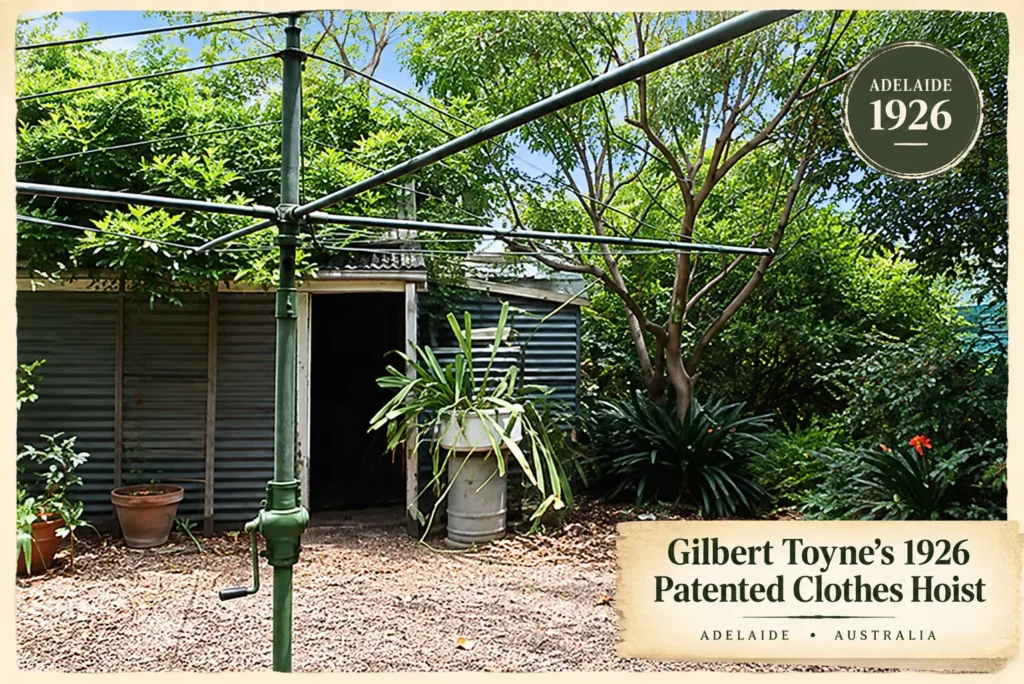
In 1926, Toyne moved to Adelaide to establish other centers. In 1928, he licensed the manufacturing and selling rights of his rotary clothes hoists to Leonard Lambert in South and Western Australia. Then he moved to Sydney in 1929 and established a business at 661 Parramatta Road, Five Dock.
By the 1930s, his clothes hoists were available all over New Zealand and Australia. Toyne’s Cloth Hoist got huge success, and their factories were built in Melbourne, Adelaide, and Sydney to meet the demand.
Did Lance Hill Really Invent The Rotary Clothes Hoist?
Toyne returned to Melbourne in 1933, where he continued manufacturing clothes hoists well into his later years. After World War II, Australia experienced a baby and housing boom.
During this period, rotary clothes hoists based on Toyne’s 1926 design became common in Australian backyards.
In 1945, Lance Hill built a rotary clothesline to solve the laundry problem for his wife. When Toyne’s patent expired, Lance Hill started his own rotary line brand and luckily succeeded in growing it quickly. However, he did not invent it from scratch; instead, he worked on Toyne’s idea of a rotary line hoist.
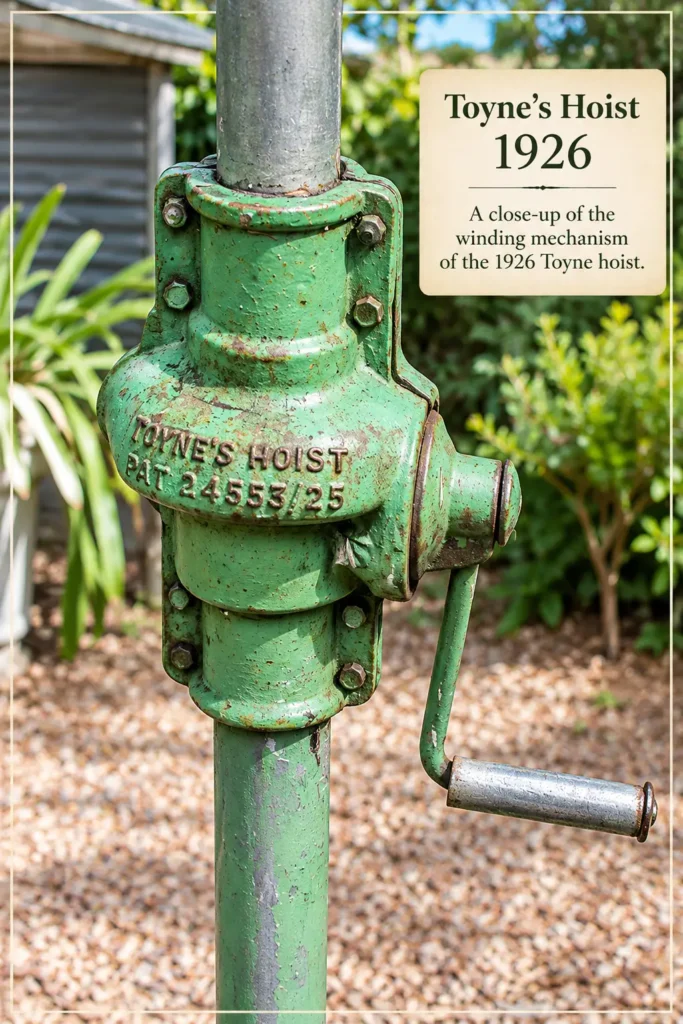
Gilbert Toyne passed away on 30 July 1983 at the age of 94. Before his death, he saw his 1926 rotary design become a popular feature in Australian backyards. However, this success was bittersweet.
Toyne spent his final years watching all credit for the invention of the rotary line hoist be given to Lance Hill and Hills Hoists. But the truth is, Gilbert Toyne was the one who invented the rotary wash line for the first time.
Similar Posts: