
Are Heated Clothes Airers Worth It? (Cost Calculator)
Heated clothes airers sell out every autumn. Aldi and Lidl put a £40 heated airer in the middle aisle and within days they are gone, all on the promise of drying a full load indoors for pennies.
I worked through the electricity maths on Ofgem’s current price cap and compared it with an 18 month test of 17 models published by Brit Brief.
What They Actually Cost To Run
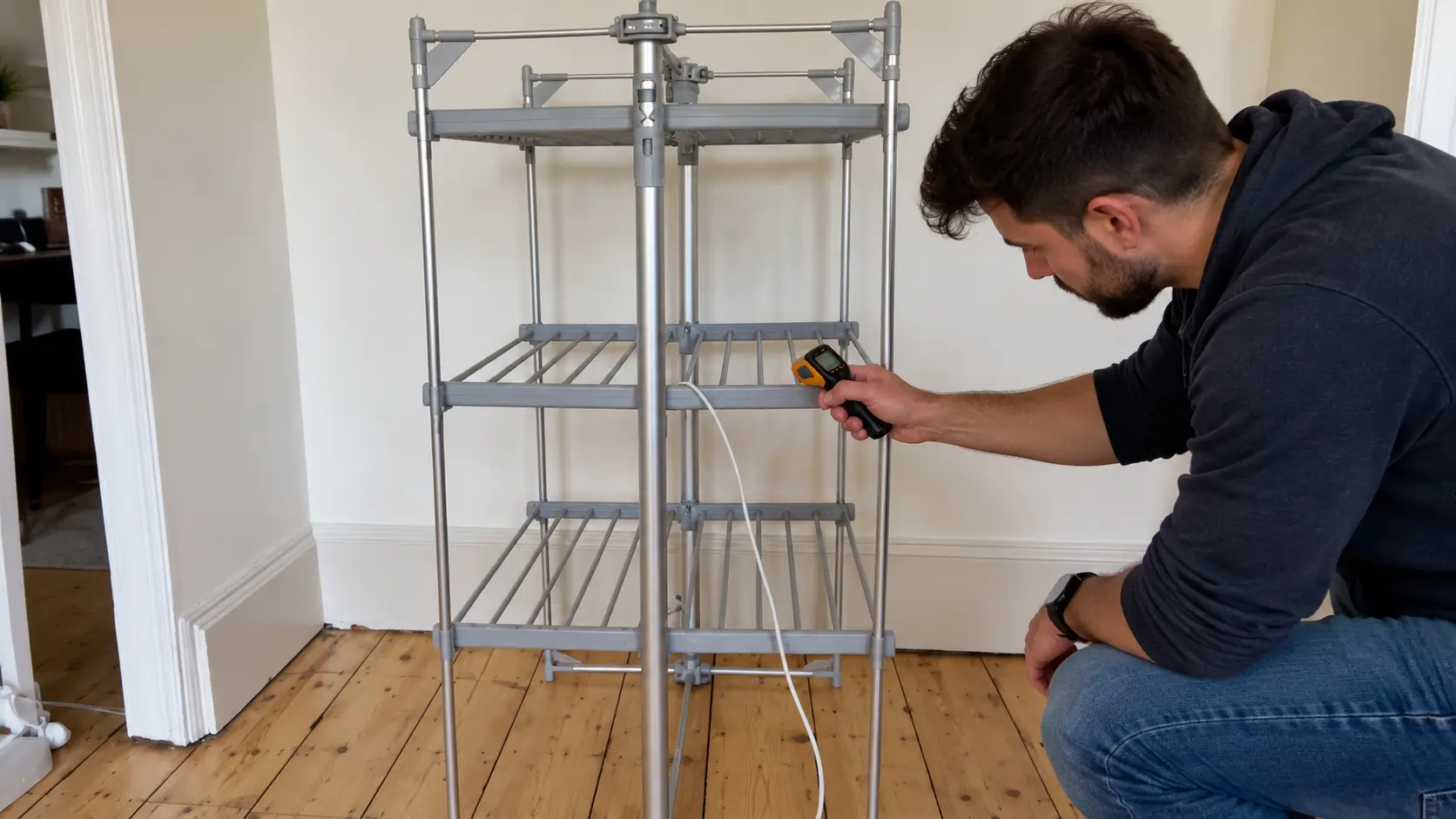
Most heated airers draw 220W to 300W. On Ofgem’s October to December 2026 cap of 26.32p per kWh, that works out as watts ÷ 1,000 × hours × 26.32p. Just over 6p an hour for a 230W model, nearer 8p for 300W.
Drying time is what matters. With a cover on, a mixed load needs 4 to 6 hours, so 30 to 50p per load. Without a cover, expect that to roughly double, because the heat escapes upward.
A conventional condenser dryer pulls about 2.5kW, roughly 66p a cycle, so the airer comes out ahead. A modern heat pump dryer narrows the gap, but most households weighing this up will not have one yet. Three loads a week on the airer instead of the dryer saves around £3 to £5 a month through winter.
They cost £40 at the supermarket, £150 plus for a Lakeland Dry:Soon with cover.
Heated Airer Running Cost Calculator (UK)
Want your own number? Use this free heated clothes airer cost calculator. Type in your airer’s watts, your drying time and your electricity price, and it shows the cost per hour, per load, per week and per month.
Heated Airer Cost Calculator
Change the numbers to match your airer and your tariff.
Default price is Ofgem’s October to December 2026 cap of 26.32p per kWh. The condenser dryer is counted as 2.5kW for 1 hour. These are estimates, so check your own bill.
Is It Worth It? The Straight Answer
Short answer: Yes, heated clothes airers are worth it. Nothing else dries a load indoors for 30 to 50p, and the low heat is kinder to clothes than any tumble dryer. For a small household without outdoor drying space, it is the most sensible way through winter.
- live in a small household
- have no outdoor drying space
- want to use the dryer less
- care for wool and delicates
- want dryer speed
- are a busy family with daily washing
- will skip the cover
It is not worth it if you want dryer speed. Four to six hours a load means a busy family will outrun a single airer. It is also poor value without the cover, which roughly doubles drying time and wipes out the saving.
A condenser dryer is faster but costs more per load and hundreds upfront. A heat pump dryer is the better machine but starts around £400. Draping clothes over radiators looks free until the gas bill and the damp arrive.
So yes, worth it. Just buy it for what it is: a slow, cheap workhorse, not a dryer replacement.
Our ResearchHeated Airer vs Dehumidifier (12 Differences)How Well They Dry (And What Slows Them Down)
They work, but they are slow.
In the Brit Brief test, at a steady 19 to 20°C, a standard airer dried a mixed load in 4 to 6 hours. Jeans and towels took the longest, and a packed load was sometimes needed overnight.
The spin cycle is the free win. Clothes out of a 1400rpm spin dry noticeably faster than at 1000rpm. The cover is the paid one: it traps warm air, and one comparison found a covered airer finished about a third faster. The room matters too. A cold spare bedroom in November adds hours, and 19 to 20°C is warmer than most British spare rooms get in winter, so treat published times as optimistic.
The genuine upside is gentleness. Low, even heat is kinder to wool, delicates, and embroidery than any tumble dryer.
Watch out for dampness. Every litre of water leaving your clothes ends up in the room’s air. In a poorly ventilated flat that means condensation and, over time, mould. Crack a window or run the extractor fan and a dehumidifier can also help.
Where They Fall Short
A dryer takes one to two hours; an airer takes most of a day. For a family washing daily, one airer becomes a bottleneck. You would need two, or plan around it.
They are bigger than they look in photos. A three tier model takes over a corner for hours, and while it folds flat enough to slide behind a door afterwards, it will not tuck away discreetly while in use. If space is tight, a ceiling airer is another choice.
The safety notes are worth a read. Do not drape bedding over the top to the floor, keep it from children and pets, and do not leave it on overnight. The bars only get warm, but it is still a plugged in appliance with wet fabric on it.
The Bottom Line
For one or two people in a flat, or anyone cutting dryer use through winter, the answer is yes. Running costs are genuinely low, and £40 to £150 pays for itself within a winter or two.
A large family running a dryer daily will find it more of a backup. One airer alone will not keep pace with that kind of laundry pile.
Whichever camp you fall into, buy the heated clothes airer with a cover. Skipping it to save £20 or so is a false economy.
18 Best Ways to Dry Clothes Indoors
If you are still confused about the worth or not, please check another indoor drying solution. Here are the 18 best ways to dry clothes indoors.