
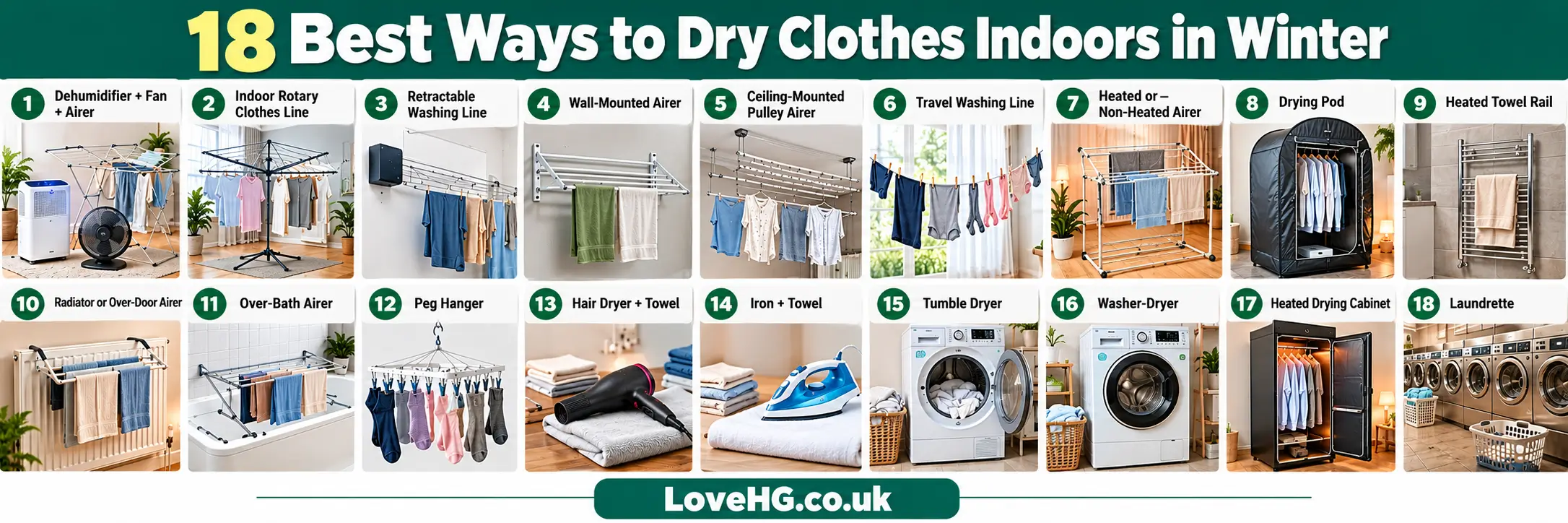
18 Best Ways to Dry Clothes Indoors (with Images)
Below are the 18 best ways to dry clothes indoors in winter without any dampness or bad smells. Read them all and choose the one that suits your budget, your space and how often you dry clothes.
We spent over a week researching this article, so it is a little long. Some links below are Amazon affiliate links. If you buy through them, we may earn a small commission at no extra cost to you. All the information is checked and kept up to date.
18 Best Ways to Dry Clothes Indoors in Winter
| # | Drying method | How it works | Average cost | Details |
|---|---|---|---|---|
| 1 | Dehumidifier + Fan + Airer | A fan moves air around clothes while a dehumidifier removes moisture from the room. | £120–£250 | Jump to details ⇓ |
| 2 | Indoor Rotary Clothes Line | A freestanding, rotating airer holds clothes and lets air move around them. | £30–£60 | Jump to details ⇓ |
| 3 | Retractable Washing Line | Pull the line from a wall-mounted case and attach it to the opposite wall when needed. | £7–£25 | Jump to details ⇓ |
| 4 | Wall-Mounted Airer | A folding rack attaches to the wall and folds flat when you finish drying. | £10–£40 | Jump to details ⇓ |
| 5 | Ceiling-Mounted Pulley Airer | Lower the rack to hang clothes, then raise it towards the warmer air near the ceiling. | £40–£120; heated £400–£600 | Jump to details ⇓ |
| 6 | Travel Washing Line | A portable line uses hooks, suction cups or other fittings to hold light clothes. | Around £14 | Jump to details ⇓ |
| 7 | Heated or Non-Heated Airer | A standard airer uses natural airflow, while a heated model uses gentle warmth to speed up drying. | £15–£170 | Jump to details ⇓ |
| 8 | Drying Pod | A zip-up fabric cover traps warm air from a heated base and fan around hanging clothes. | Varies | Jump to details ⇓ |
| 9 | Heated Towel Rail | A heated bathroom rail warms towels and small clothing items and helps moisture evaporate. | Already installed | Jump to details ⇓ |
| 10 | Radiator or Over-Door Airer | A radiator airer hangs over a radiator. An over-door rack uses hooks and natural airflow. | £3–£15 | Jump to details ⇓ |
| 11 | Over-Bath Airer | A folding rack sits across the bath, so dripping water falls straight into it. | £10–£30 | Jump to details ⇓ |
| 12 | Peg Hanger | Many pegs hold small items such as socks, underwear and gloves in one compact space. | Around £7 | Jump to details ⇓ |
| 13 | Hair Dryer + Towel | A towel removes extra water, then a hair dryer blows warm air over single items. | Already owned | Jump to details ⇓ |
| 14 | Iron + Towel | A dry towel absorbs extra moisture, then a suitable iron setting removes the dampness. | Already owned | Jump to details ⇓ |
| 15 | Tumble Dryer | A rotating drum dries clothes with heated air. Condenser and heat pump models collect moisture differently. | £220+ | Jump to details ⇓ |
| 16 | Washer-Dryer | One machine washes and then dries clothes, which saves space in smaller homes. | £300+ | Jump to details ⇓ |
| 17 | Heated Drying Cabinet | Clothes hang in a closed cabinet where warm, moving air removes moisture. | Varies | Jump to details ⇓ |
| 18 | Laundrette | Use a self-service tumble dryer, or pay staff to wash, dry and fold your clothes. | £2–£6 for self-service drying | Jump to details ⇓ |
Dehumidifier + Fan + Drying Airer or Hanger
- Cost: £120–£250
- Best for: small to medium loads in a closed room
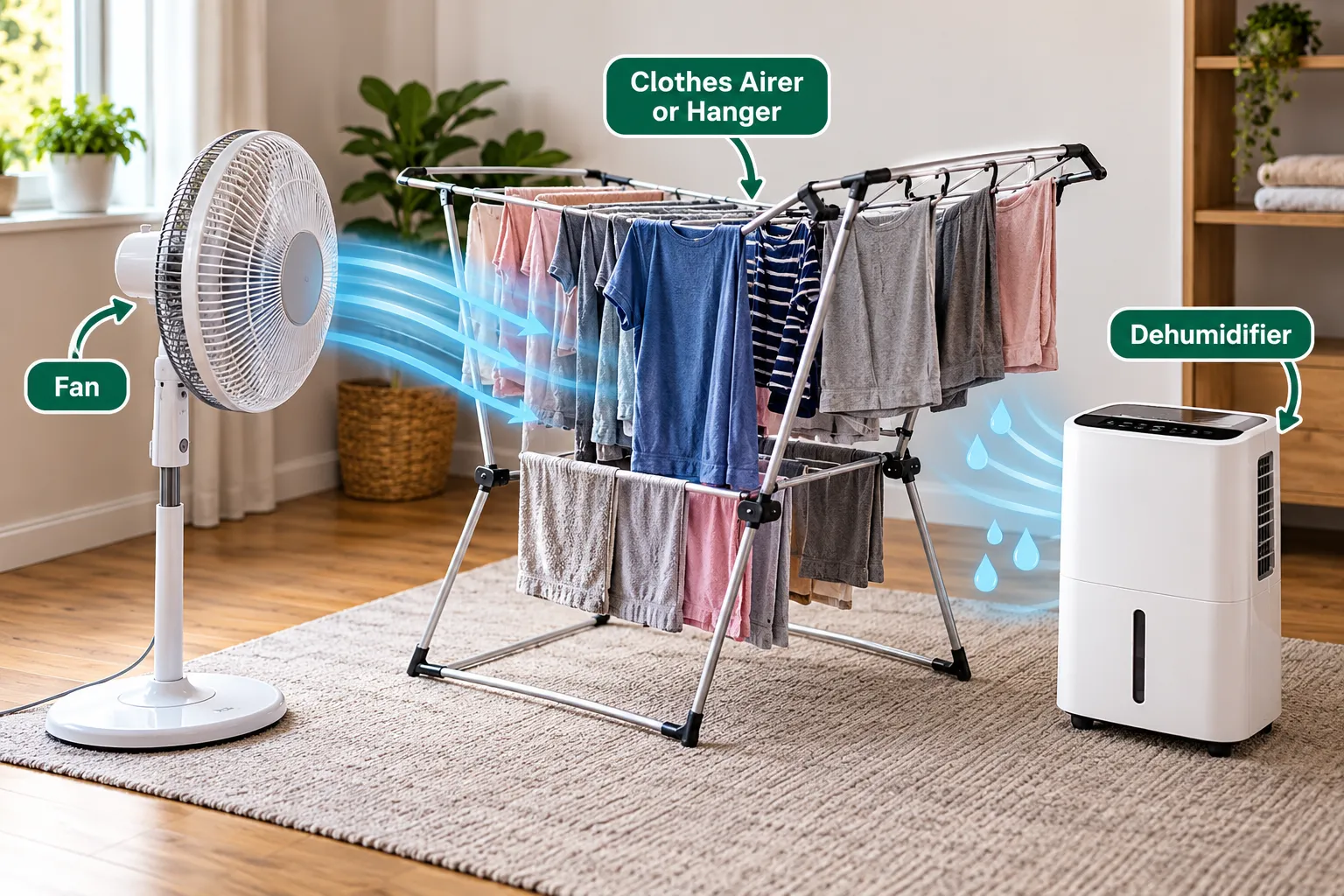
Hang your clothes on a clothes airer or hanger if you have fewer items. Place a fan behind the clothes and the dehumidifier nearby. The dehumidifier removes moisture from the air, which dries clothes faster, usually within 2–5 hours depending on the fabric. Using a dehumidifier without a fan takes around 4–6 hours.
Most dehumidifiers cost around 7p–30p per hour to run. This is a budget-friendly way to avoid dampness and bad smells. The main disadvantage is the high price to buy.
Want to know how it works? Read our step-by-step guide.
4 simple steps to dry clothes with a dehumidifierIndoor Rotary Clothes Line
- Cost: £30–£60
- Best for: drying with no electricity
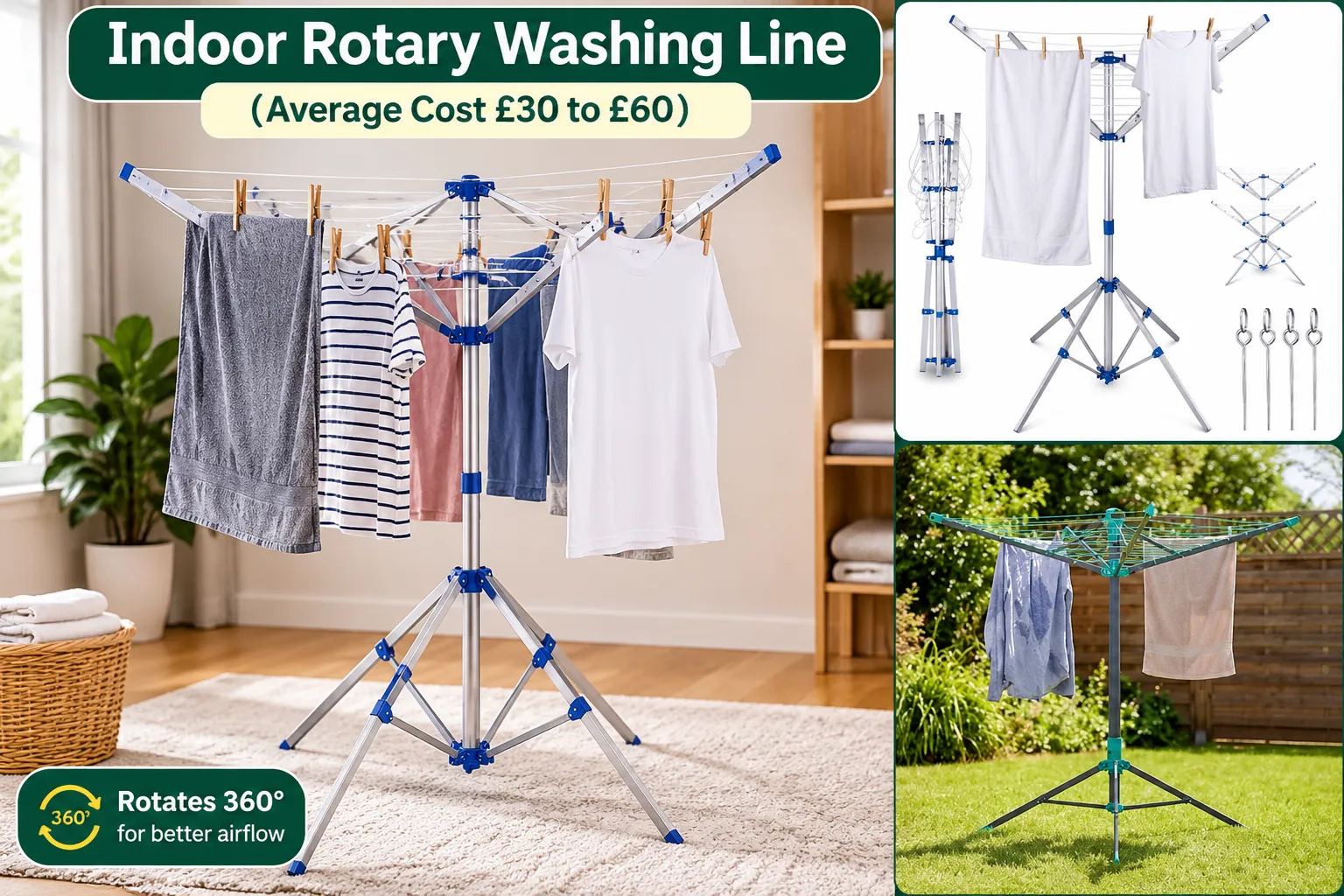
An indoor rotary clothes line is a freestanding airer, usually with 3 or 4 arms that turn 360 degrees in the natural airflow. It uses no electricity. Open it when you need to dry clothes, hang the washing, and fold it away when you finish. It takes up little space when folded.
Place it somewhere with enough airflow for the arms to turn. You can also use it with the dehumidifier and fan from method 1. Use this rotary airer instead of a standard airer, because the turning arms can help clothes dry even faster.
Under £46 · 4.6 rating · holds up to 15 kg · 100+ bought in the past month on Amazon UK (at the time of writing).
Compare more models before you buy.
See the 10 best rotary washing lines in the UKRetractable Washing Line (Indoor)
- Cost: £7–£25
- Best for: small rooms, bathrooms and utility rooms
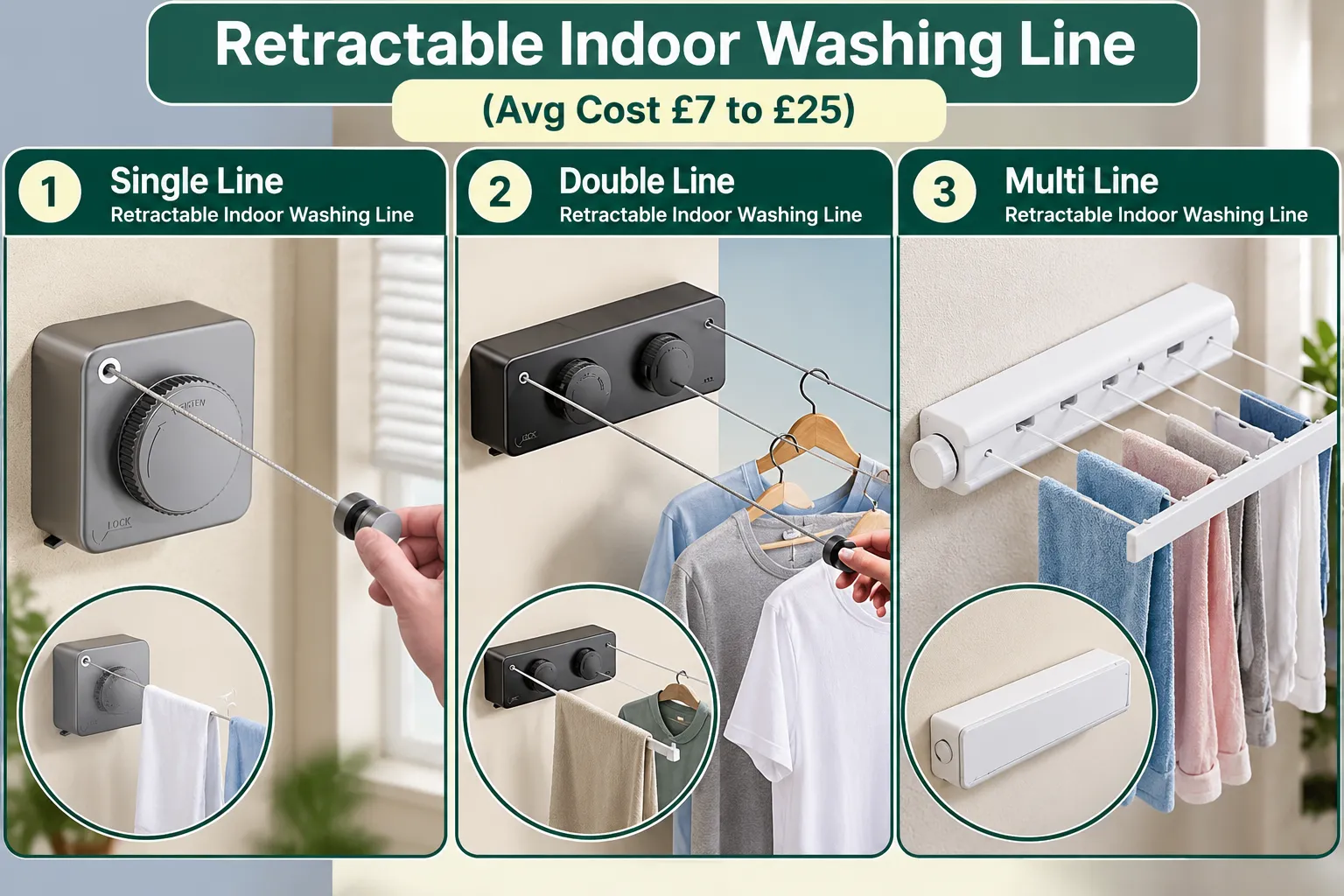
A retractable washing line is a small box fixed permanently to a wall. When you need to dry clothes, pull out the line and attach it to the other side of the room with a bracket, cleat or hook. Some have one line, some have two, and others have up to five.
Single lines are usually 4 to 5 metres long, while multi-line models offer up to 22 metres. Most support 10–20 kg, and some support up to 40 kg.
22 metres of line · holds up to 12.5 kg · under £28 · 4.2 stars · 200+ bought in the past month · 5 year guarantee.
Holds up to 40 kg but the line is 4.2 metres long · under £38 · 4.6 stars · 91% of users like it. Good for small loads of heavy items.
See every model we tested, with pros and cons.
See the 12 best retractable washing lines in the UKWall-Mounted Washing Line (Airer)
- Cost: £10–£40
- Best for: utility rooms, kitchens and small homes
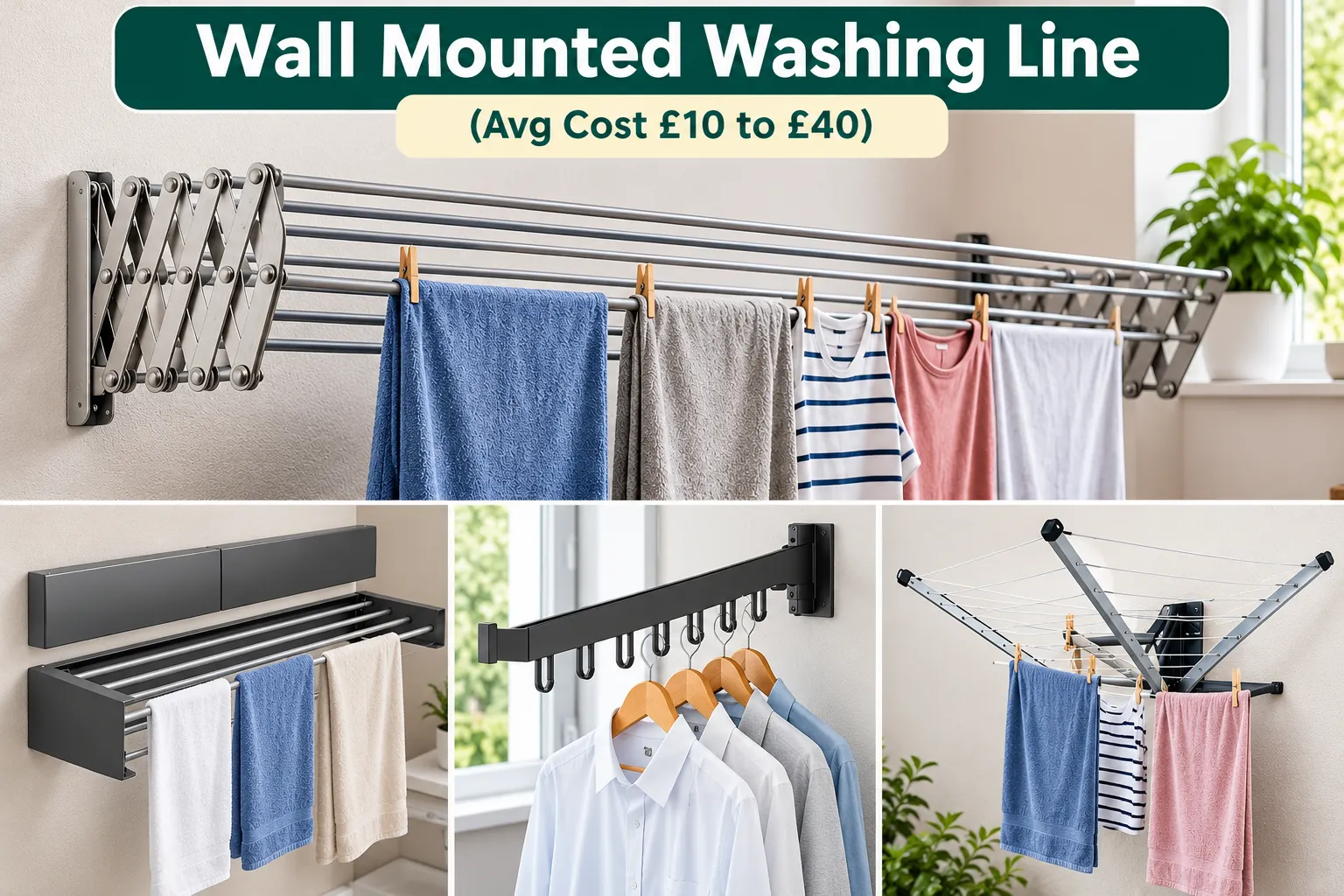
A wall-mounted airer is fixed to the wall and folds out when you need it. Then it folds back flat to save space. It is ideal for utility rooms, kitchens or small areas where floor space is limited. Clothes dry using the air in the room, so it is a tidy choice for small homes.
There are also heated wall-mounted airers, which cost around £28–£650.
Under £35 · 8.1 metres of line · holds 19 kg · 4.5 stars · 18K+ ratings · 91% of users like it.
Find the right size and style for your wall.
See the 9 best wall-mounted washing lines in the UKCeiling-Mounted Pulley Clothes Airer
- Cost: Non-heated £40–£120 · heated £400–£600
- Best for: saving floor space
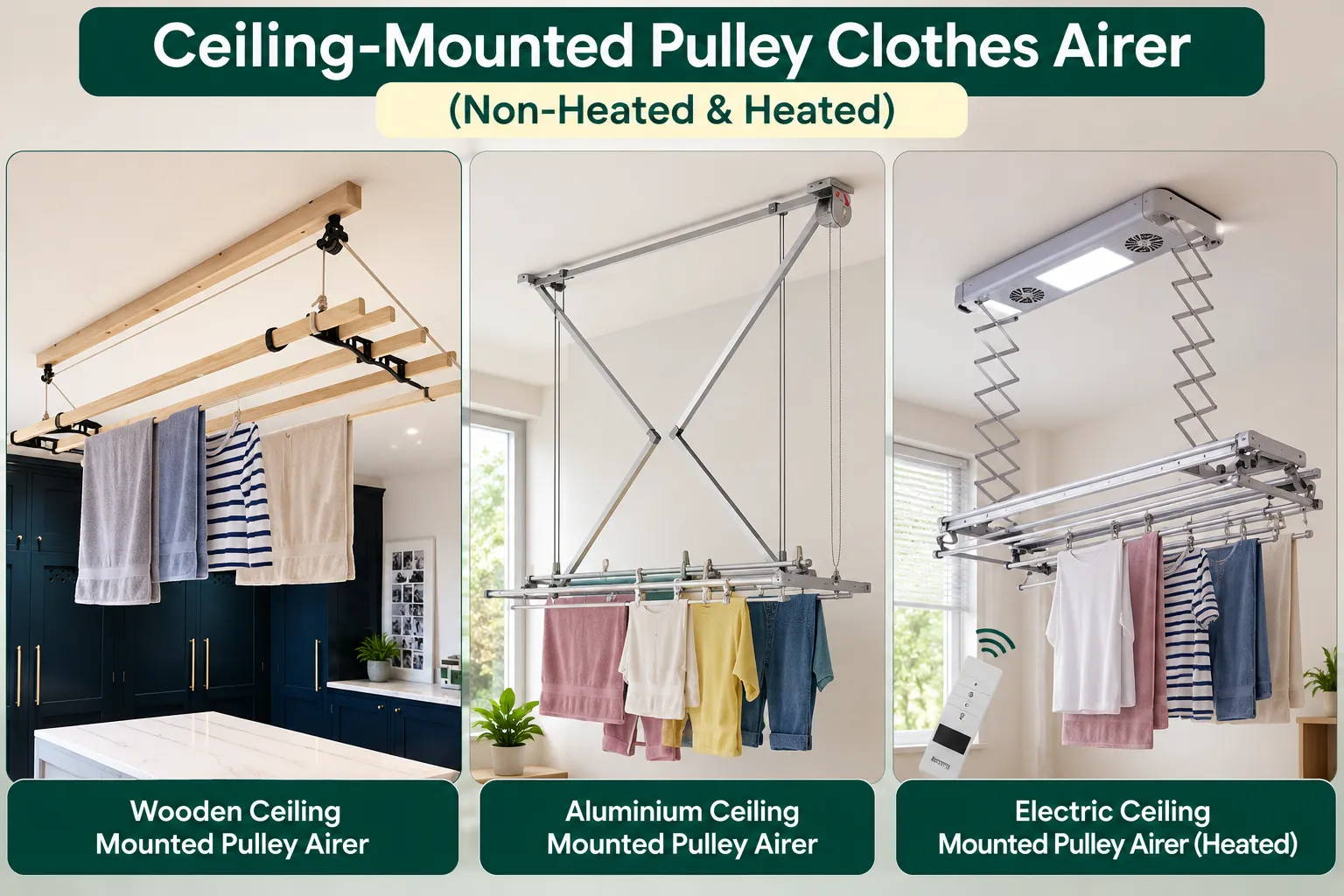
A ceiling-mounted (pulley) airer is fixed to the ceiling and lowered with a rope when you need to hang washing. Once the clothes are on, pull the airer back up towards the warmer air near the ceiling so they dry naturally. Most models use a wall hook to hold the rope. Some have a chain mechanism and do not need a wall hook.
6 options · line length 0.9–2.4 metres · holds over 30 kg · £80–£160.
Electric (heated) ceiling airers
Electric, motorised airers blow warm air to dry clothes faster. You control them with a remote: hang the clothes, press the button, and the airer moves up or down by itself. They are expensive, with an average cost of £400–£600. Many include LED lights, which are useful in laundry areas, and some have UV sterilisation.
£420 · 4.7 stars from 390 reviews · 94% of users like it · 20 metres of line · 24 hanger slots · 35 kg capacity · two-year warranty.
Compare heated and non-heated models in full.
See the 12 best ceiling-mounted pulley airers in the UKTravel Washing Line
- Cost: Around £14
- Best for: small, light loads and tight spaces
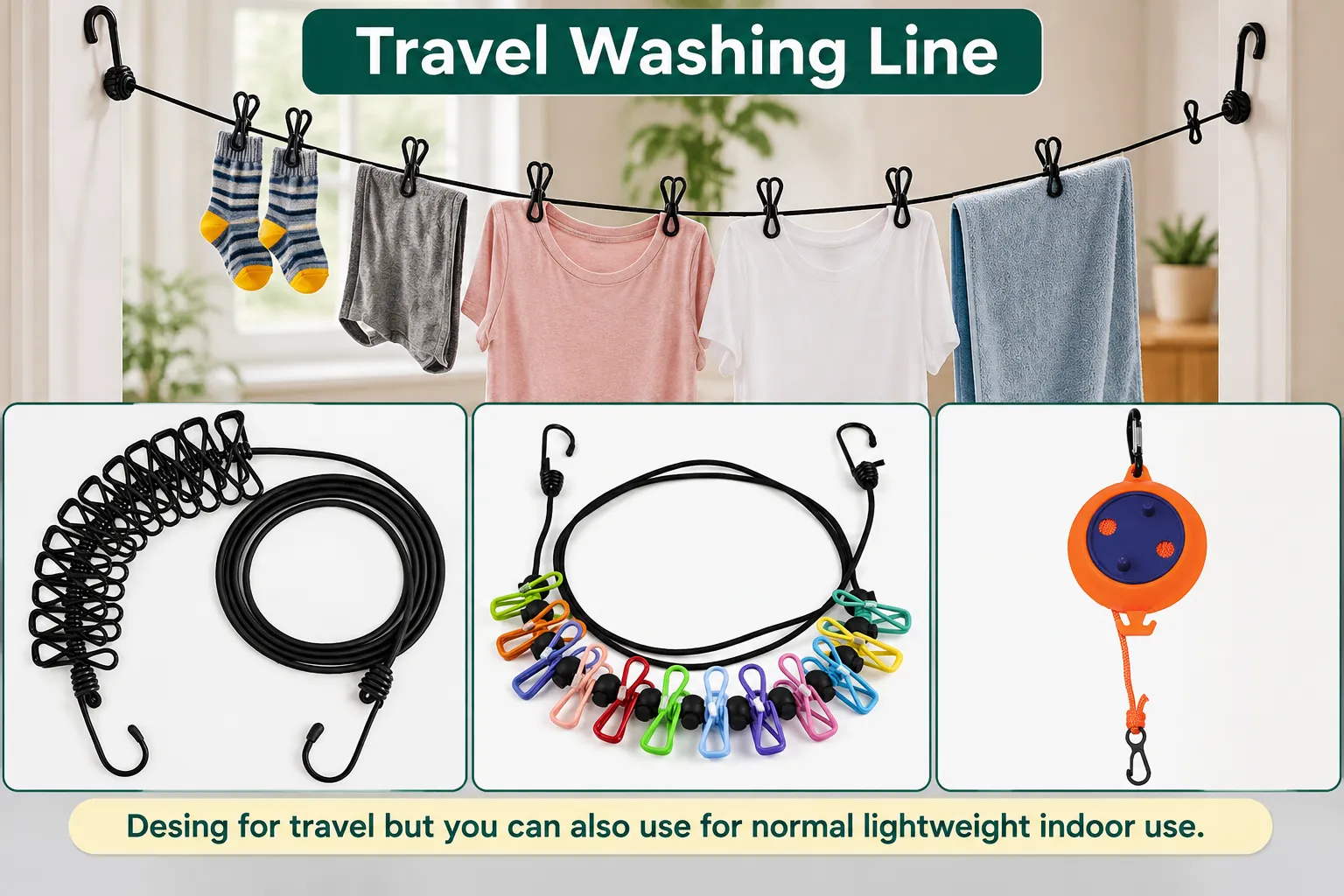
A travel washing line is made for trips, but it is small and portable, so many people use it at home too. It suits small loads, light clothes or tight spaces. Many travel lines need no pegs, and many need no drilled holes because they use suction cups or Velcro loops.
See more portable options.
See the 10 best travel washing lines in the UKClothes Airer (Heated & Non-Heated)
- Cost: Non-heated £15–£40 · heated £30–£170
- Best for: everyday drying for most homes
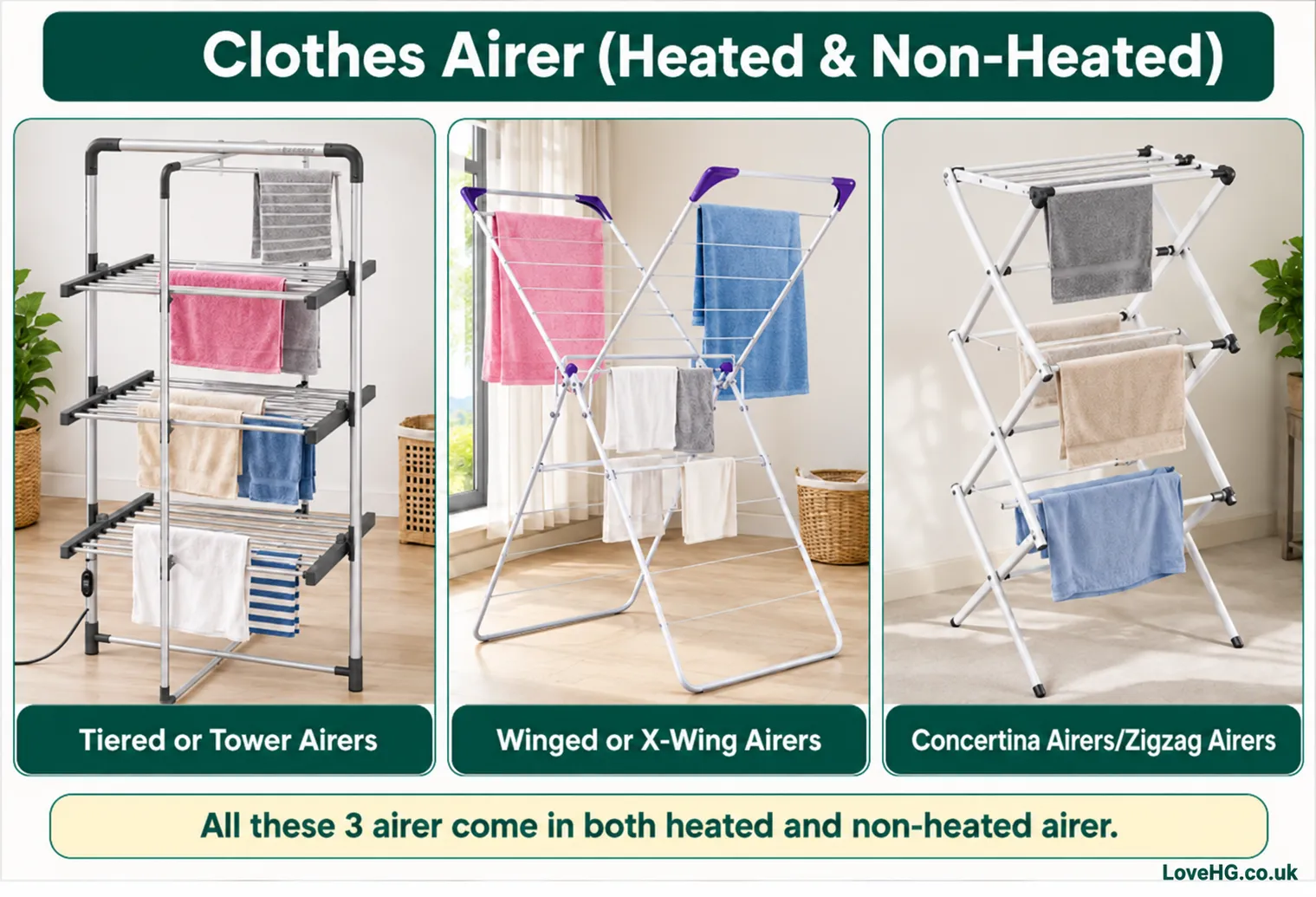
Non-heated airers normally cost £15–£40, while heated ones cost £30–£170. The running cost of a heated airer is around 8p–10p per hour. The main disadvantage of a non-heated airer is the risk of musty smells if there is no airflow. With a heated airer, you need to turn garments by hand to dry them evenly, but it is gentle on clothes.
There are 3 main types of airer, heated and non-heated:
- Tiered or tower airers: These stand like a tower with 3 or 4 separate levels. Some have wheels, so you can move them easily. Drying space is 15–33 metres and weight capacity is 10–35 kg, depending on the brand.
- Winged or X-wing airers: These have two wings that fold out when needed. When you finish, fold them down and store them under a bed or behind a cupboard. Drying space is 10–24 metres, capacity is 10–18 kg, and the airer weighs 2–4 kg.
- Concertina or zigzag airers: These have an interlocking zigzag frame. Pull it up to open and push it down to fold flat. Most are made from wood or light metal.
Want a heated airer with a cover? We compared the best ones.
See the 7 best heated clothes airers with covers (UK)Drying Pod
- Cost: 18p–34p per hour to run
- Best for: drying a full load fast in winter
A drying pod, or tent-style heated airer, is a small, compact indoor electric dryer. You can hang up to 14 items inside it. Close the zipped cover, then switch it on. A gentle heated fan moves warm air around the clothes, so they dry faster than with normal air drying. It suits most fabrics.
Running cost is 18p–34p per hour, depending on the model.
Typical drying times
- Underwear and socks: 30 minutes to 1 hour
- Shirts and T-shirts: 1 to 2 hours
- Jeans, jumpers and towels: 2 to 4 hours
- A full average wash load: 3 to 4 hours
Compare the top pods in the UK.
See the 7 best drying pods in the UKHeated Towel Rail Drying (Bathroom Method)
- Cost: 4p–8p per hour to run
- Best for: socks, T-shirts, gym clothes and baby clothes
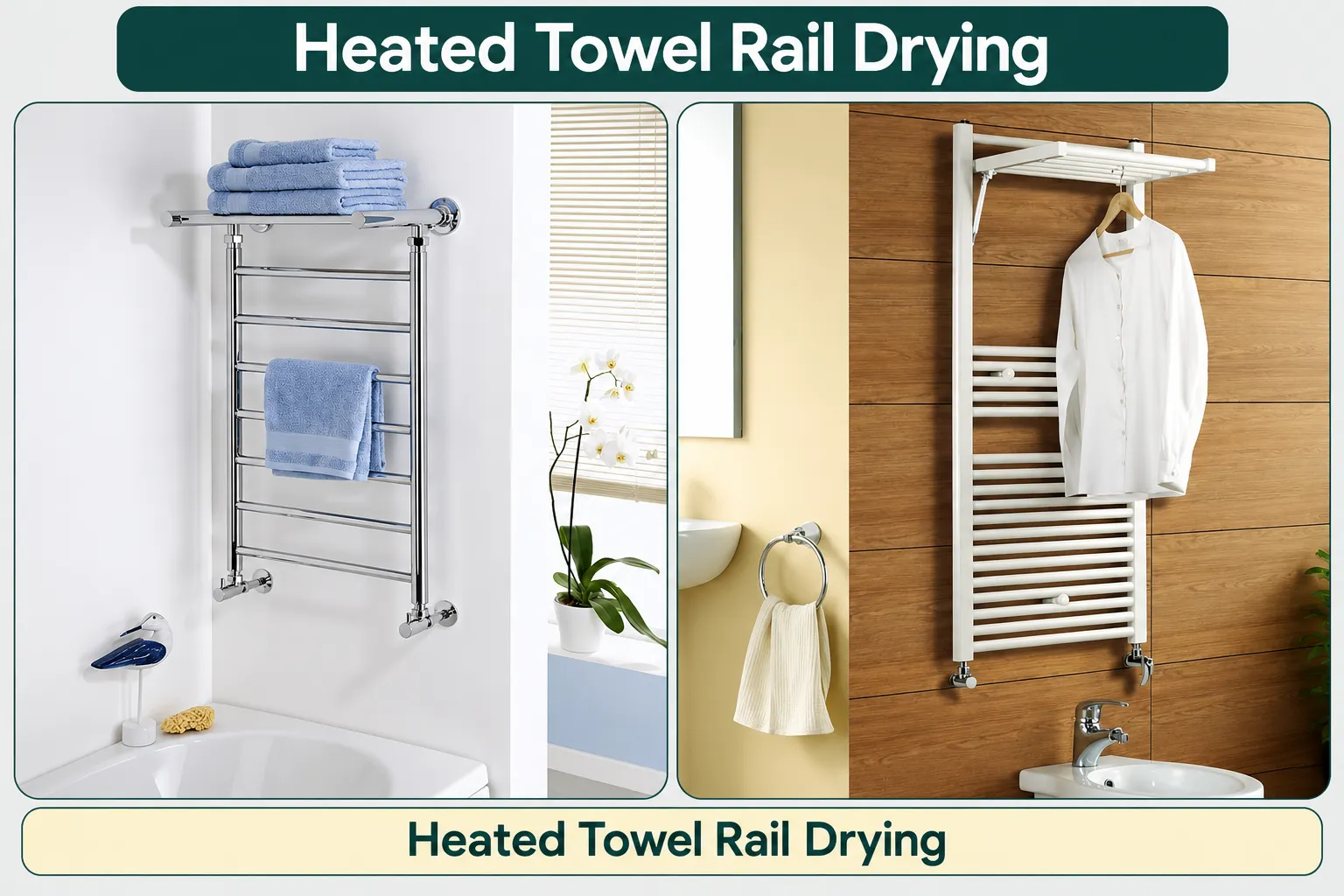
A heated towel rail (also called a towel radiator or ladder radiator) is installed in a bathroom. It dries towels and also heats the room. You can use it for other clothes too.
This works best for small loads. Bathrooms are built to cope with moisture, so the risk of damp and mould is lower than in bedrooms or living rooms.
Running cost: very low. Most heated towel rails use 60–150 watts, which costs only 4p–8p per hour. That is cheaper than a tumble dryer and similar to a small fan.
Drying time
- Socks and underwear: 1–2 hours
- T-shirts: 2–4 hours
- Hoodies and jeans: 4–6 hours or longer
Shut the bathroom door to keep the warmth in. If you have an extractor fan, switch it on to remove extra moisture. If you do not have one, open the window slightly.
Radiator Airer or Over-Door Airer
- Cost: £3–£15
- Best for: socks, underwear and baby clothes
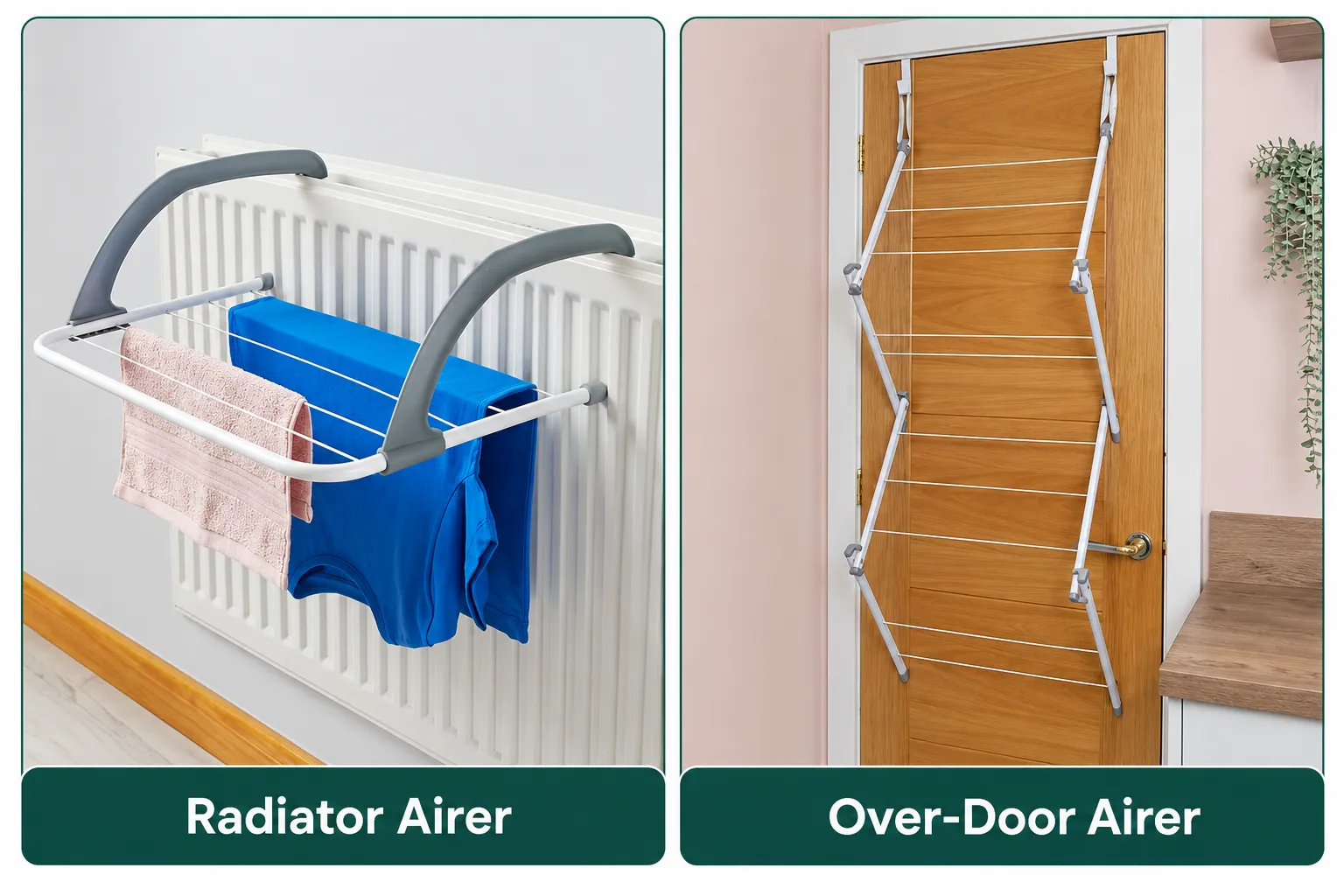
A radiator airer is a small, light metal rack that hangs over a radiator. It works best when the radiator is warm. If the radiator is off, clothes dry using the airflow in the room. An over-door airer has plastic or metal hooks that fit over the top of a door and relies on natural airflow only. Both are useful for small loads and do not take up much floor space.
They have 3–6 bars and 3–4 metres of hanging space. They are easy to set up, remove and store.
Over-Bath Airer
- Cost: £10–£30 (range £5–£60)
- Best for: drying without wet floors
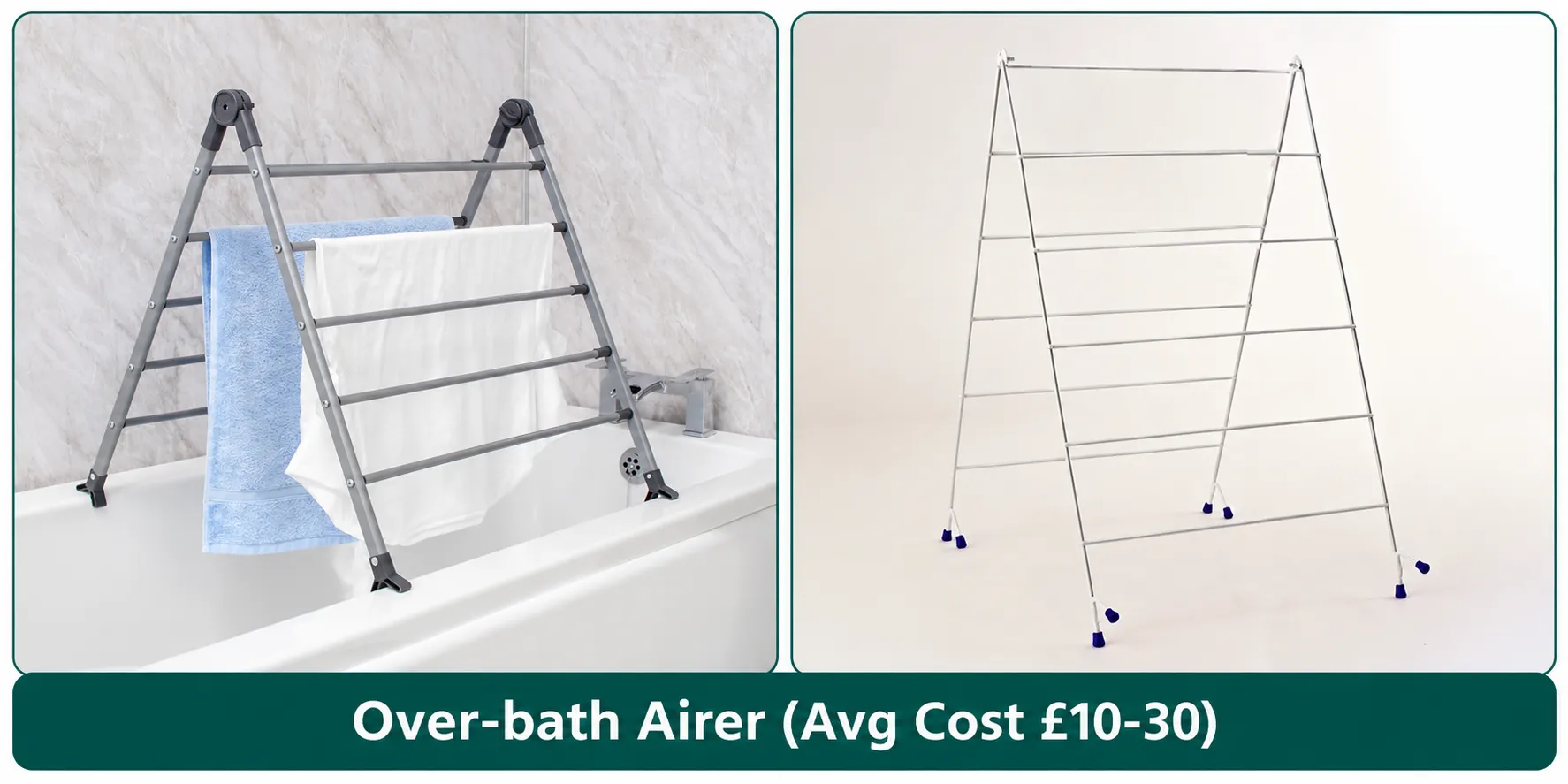
An over-bath airer sits across the bathtub. It has an A or V shape and a non-slip frame that helps prevent scratches. It has around 15–16 bars and about 7–10 metres of hanging length.
Water from damp clothes does not drip onto the floor. It falls straight into the bath. When you finish, fold the airer away. It is made from light metal, so it is easy to store in a bathroom corner or another indoor space.
The average cost is £10–£30. The lowest and highest prices are around £5 and £60, depending on brand and quality.
Peg Hanger
- Cost: Around £7
- Best for: socks, underwear, gloves, mittens and hats
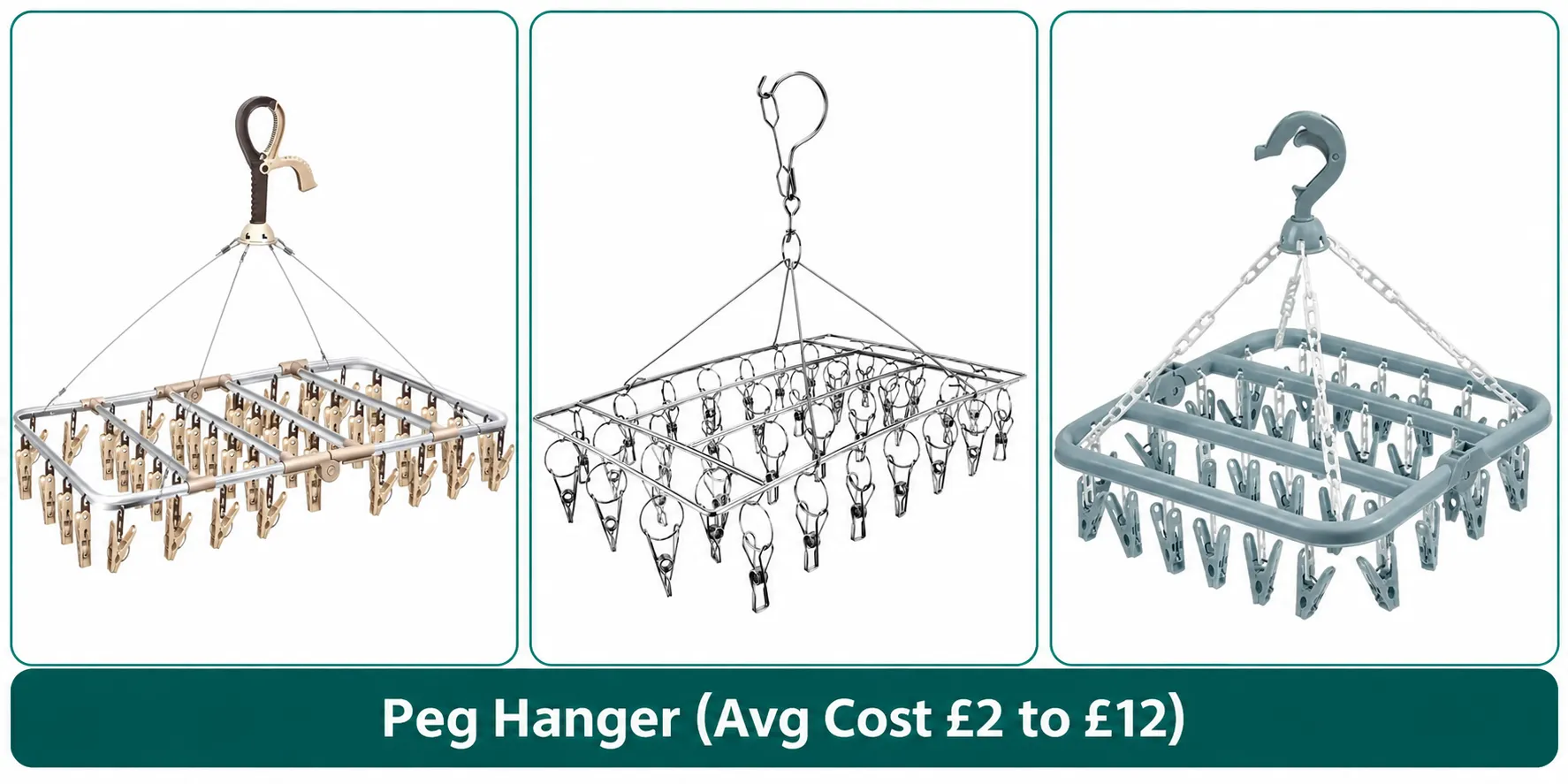
A peg hanger is a small airer with 16–32 pegs that hangs from a rail, hook, shower rod or washing line. It is compact and portable. Use it indoors or outdoors, wherever there is some natural airflow. It takes very little space and is easy to store. It is made from strong plastic, polypropylene or rust-resistant steel. Some models have arms that fold flat.
Compare more peg hangers.
See the 10 best washing line hangers in the UKHair Dryer + Towel (Emergency Use Only)
- Cost: Already owned
- Best for: one or two items in a hurry

A hair dryer can dry one or two small items quickly. It uses more electricity than airers or dehumidifiers, so keep it for emergencies. It is not for full loads.
First, remove as much water as you can. Wring out the garment, or roll it in a towel and squeeze. Then hang it on a hanger or rack, or lay it flat on a clean surface. Hold the hair dryer 20–30 cm away and move it back and forth over the damp area. Use medium heat and do not stay in one spot for too long, to avoid fabric damage or shrinking.
Bag trick: put a damp T-shirt inside a clean plastic bag and hold the opening loosely near the hair dryer. Blow warm air into the bag and shake the T-shirt now and then. A light T-shirt can dry in 5–6 minutes this way.
Drying time without a bag
- Socks and underwear: 5–10 minutes
- Light T-shirt or blouse: 10–15 minutes
- Jeans, jumpers and hoodies: 30–45 minutes or more (not recommended, as it uses a lot of electricity)
Using a hair dryer for a long time can make it overheat or blow a fuse.
Iron + Towel (Emergency Use Only)
- Cost: Already owned
- Best for: a quick fix when nothing else is available
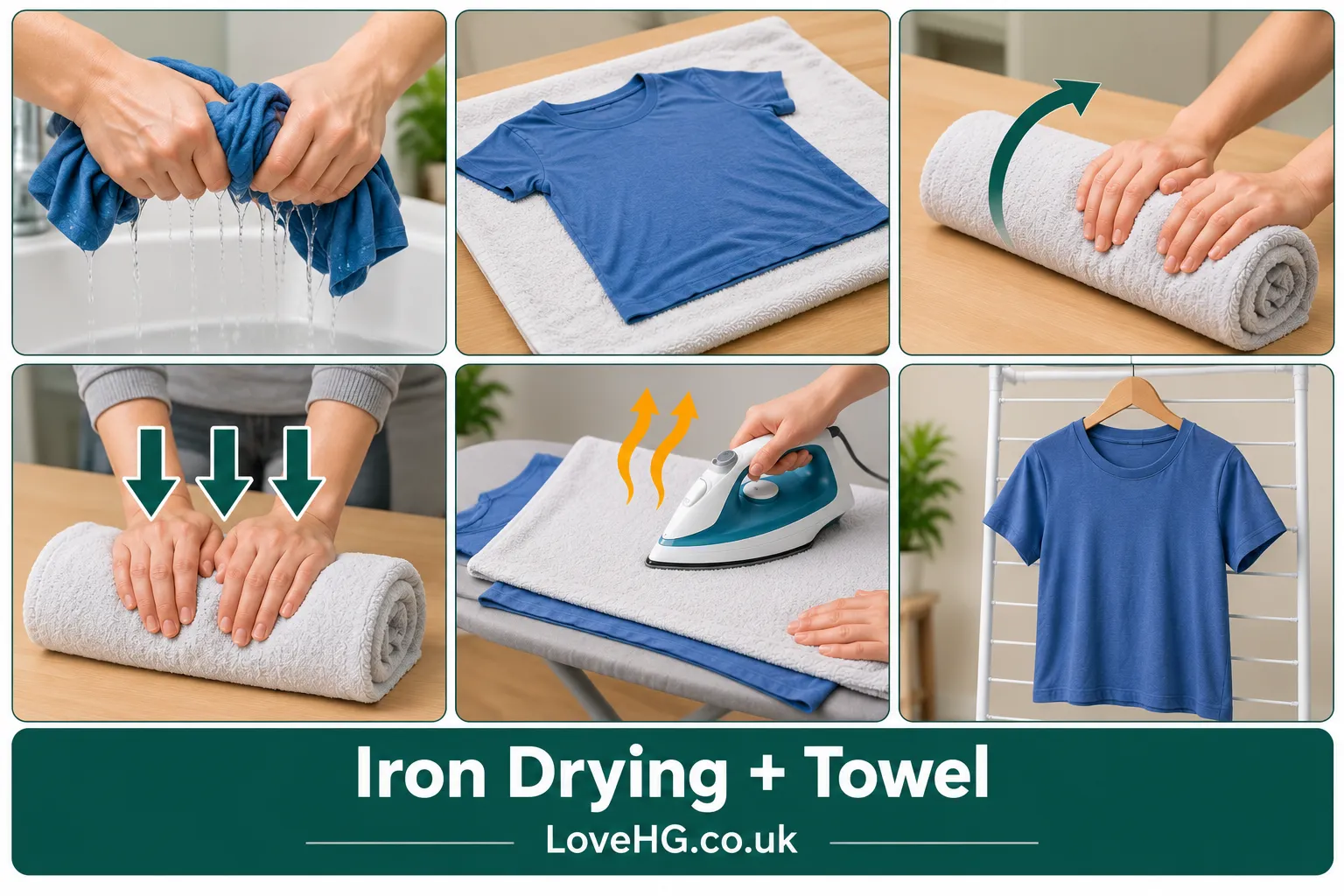
This is a quick way to dry clothes with a dry towel and an iron. It dries clothes, but not perfectly.
- Lay the wet garment on a clean, dry towel.
- Roll the towel tightly like a burrito and press it firmly with your hands or feet to squeeze out the water.
- Place the garment on an ironing board and cover it with a thin, dry towel to protect the fabric.
- Move a warm iron over the towel until the remaining moisture goes.
Always check the care label and use a suitable heat setting. Cotton and linen are fine for this method. Delicate fabrics such as silk or wool should never be ironed wet.
Tumble Dryer (4 Types)
- Cost: From £220
- Best for: fast drying for busy families
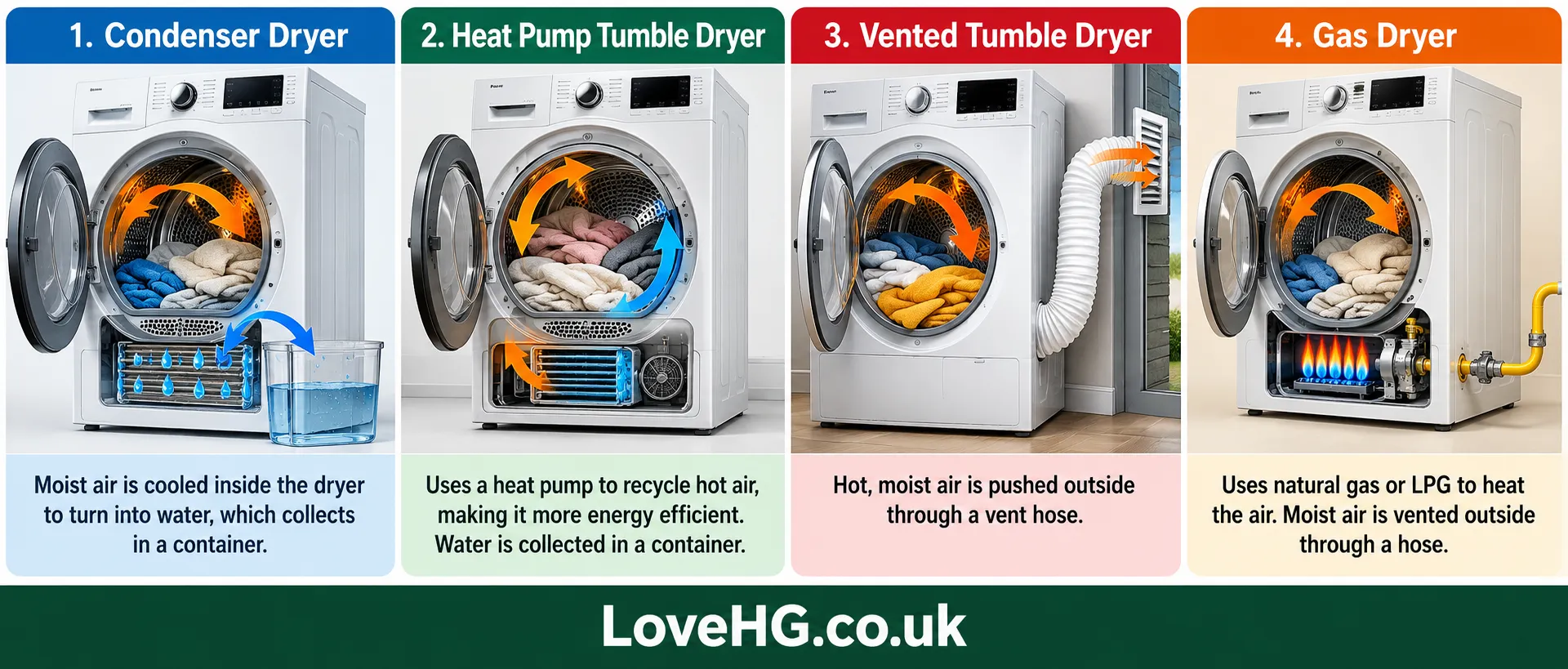
There are 4 main types of tumble dryer: condenser, heat pump, vented and gas. In our experience, condenser and heat pump dryers are the best for drying clothes.
1. Condenser dryers
These dry clothes with hot air and collect the moisture in a small tank that you empty every few loads. You do not need a vent or a hole in the wall, so you can place them anywhere with a plug socket.
- Drying time: about 20–40 minutes per 1 kg of clothes
- Price: from around £220, average £313. Usually cheaper to buy and faster than heat pump dryers.
- Running cost: a little higher. About £71 per year for one load (up to 9 kg) a week, or about £143 per year for two loads a week. If you only use it in winter, the cost will be lower.
2. Heat pump dryers
These reuse warm air instead of releasing it, so they are much more energy-efficient. The moisture goes into a tank that you empty after a few loads, or it can be connected to a drain. No vent is needed.
- Drying time: about 30–45 minutes per 1 kg. The lower heat is gentler on clothes.
- Price: from £249 for a basic model, average £350–£1,000.
- Running cost: about £46 per year for one load (up to 9 kg) a week, or about £92 per year for two loads a week. Most people only use it in winter, so the cost is often lower.
3. Vented dryers
These use heated air and send the damp air outside through a hose. They are usually cheaper to buy than condenser and heat pump dryers, but they need a suitable window or wall vent. Running costs can be higher than heat pump dryers.
We do not recommend them. Many people dislike their high electricity use, they do not suit every home, and they can have a shorter lifespan. Their one advantage is faster drying.
4. Gas dryers
A gas dryer is a good option if you have a natural gas line. It is not common in the UK, but it offers lower running costs and faster drying. There are fewer models to choose from, they cost more to buy, and they need professional installation.
| Feature | Gas dryer | Electric dryer |
|---|---|---|
| Drying speed | Faster | Slower |
| Upfront cost | Higher | Lower |
| Running cost | Lower (cheaper gas) | Higher |
| Installation | Needs a gas line and venting | Usually a plug socket, and venting for some types |
| Maintenance | Needs professional checks | Generally easier |
Tips to dry faster in a tumble dryer
- Add a dry towel with the wet clothes. It soaks up extra moisture.
- Use a dryer ball or egg. It separates clothes and improves airflow.
- Dry similar fabrics together. Heavy items like jeans take longer.
- Shake clothes before drying to reduce wrinkles and help air move.
Washer-Dryer (Wash & Dry in One Place)
- Cost: From £300
- Best for: small homes and flats
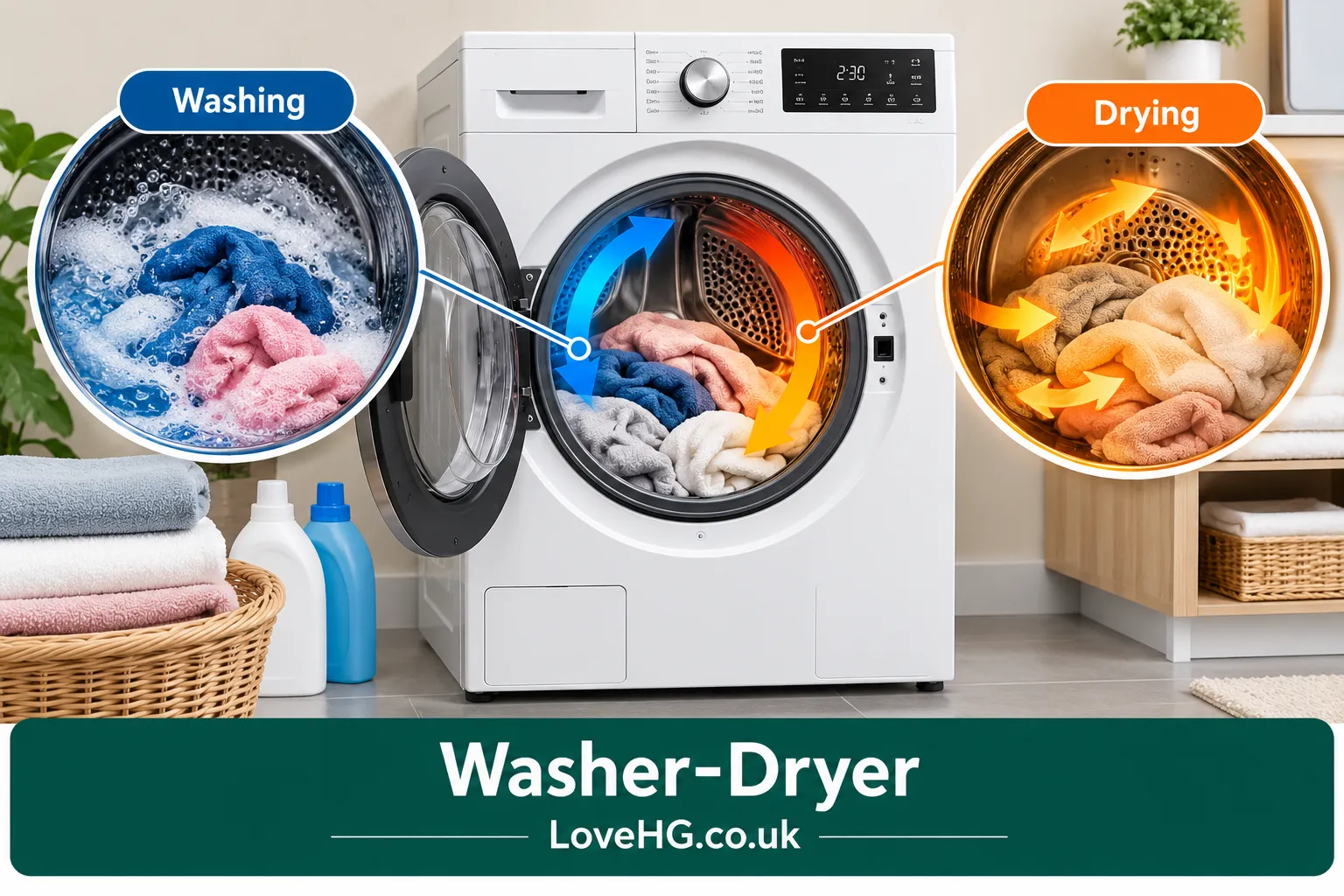
A washer-dryer washes and dries your clothes in one machine. It is a good choice for small homes, flats and people with no space for two machines. You do not need to move clothes from one machine to another.
However, it is not as fast or powerful as a separate washing machine and tumble dryer.
How it works: put your clothes in, choose a washing programme, and when the wash ends, select the drying option. Some models wash and dry in one go.
Drying time: usually 2–4 hours for a full load. A washer-dryer also cannot dry as much as it washes. For example, a machine may wash 8 kg but only dry 4–5 kg at a time, so you may need to take some clothes out first.
Running cost: washer-dryers use more electricity and water for drying than heat pump dryers. They are cheaper to buy (from around £300), but cost more to run than modern tumble dryers.
Washer-Dryer Summary
A washer-dryer is best if you have little space. If you have room, a separate washing machine and heat pump dryer gives better results, faster drying and lower running costs.
Heated Drying Cabinet
- Cost: Varies
- Best for: delicate clothes and shoes
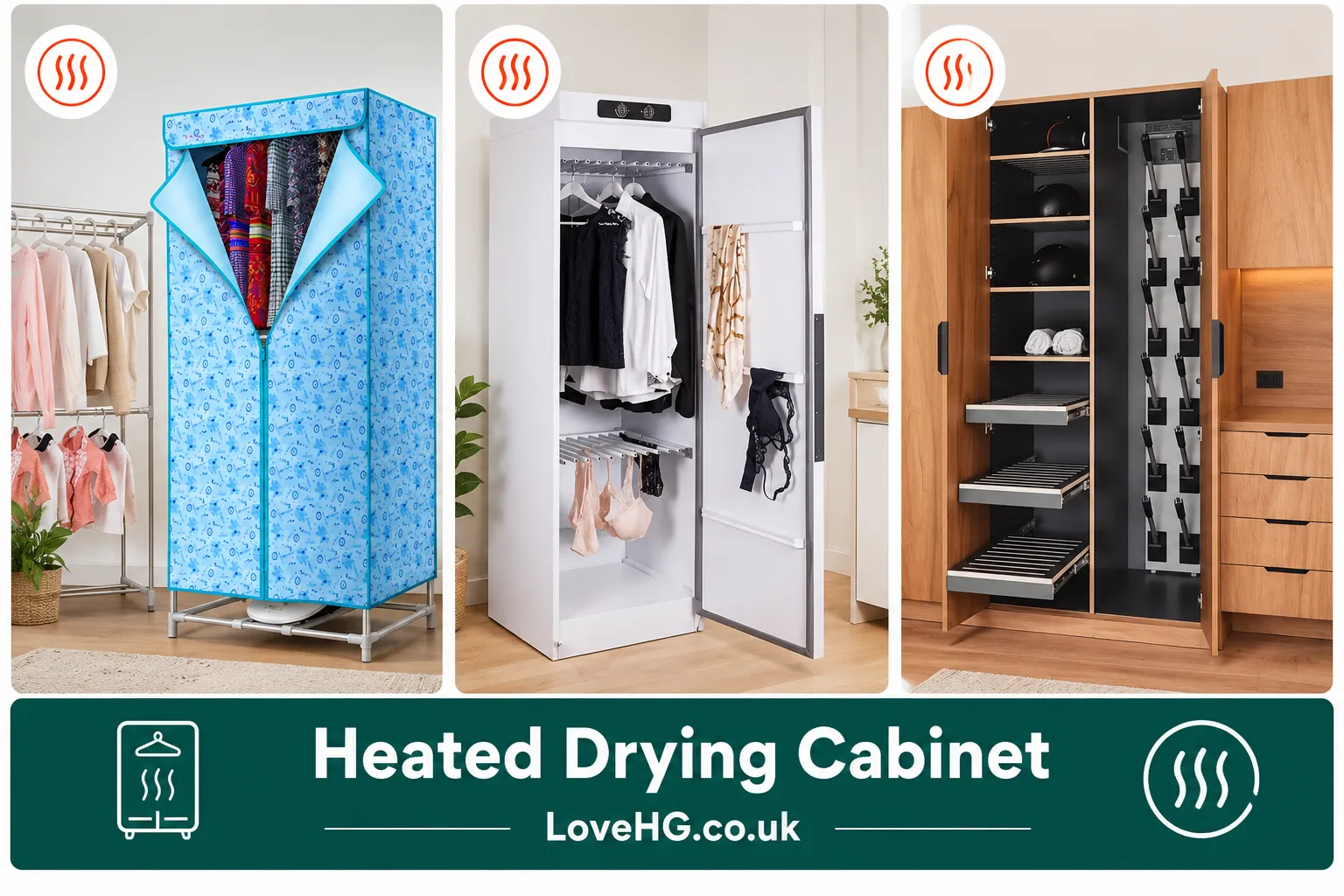
A heated drying cabinet dries clothes with warm air and fans, without spinning or tumbling them. Electric heaters warm the air inside, and fans move it around the clothes so the moisture evaporates. You can hang clothes inside, or place items such as shoes.
To dry properly, the cabinet must also remove the damp air. Some models send it outside. Others collect the moisture as water, or use a heat pump to remove it and reuse the heat. Clothes stay still on rails or racks, so there is less rubbing than in a tumble dryer. This can help reduce wrinkles, fabric damage and shrinkage.
A drying cabinet is similar to a drying pod. The main difference is the outer shape: a cabinet has solid walls, a top and a bottom, while a drying pod uses a light fabric cover. Both use warm air and fans, but their heating and moisture removal systems may differ.
Prefer a cheaper, fabric version? Compare drying pods.
See the 7 best drying pods in the UKLaundrette (Service Wash & Self-Service)
- Cost: £2–£6 for self-service drying
- Best for: big loads, bedding and no machine at home
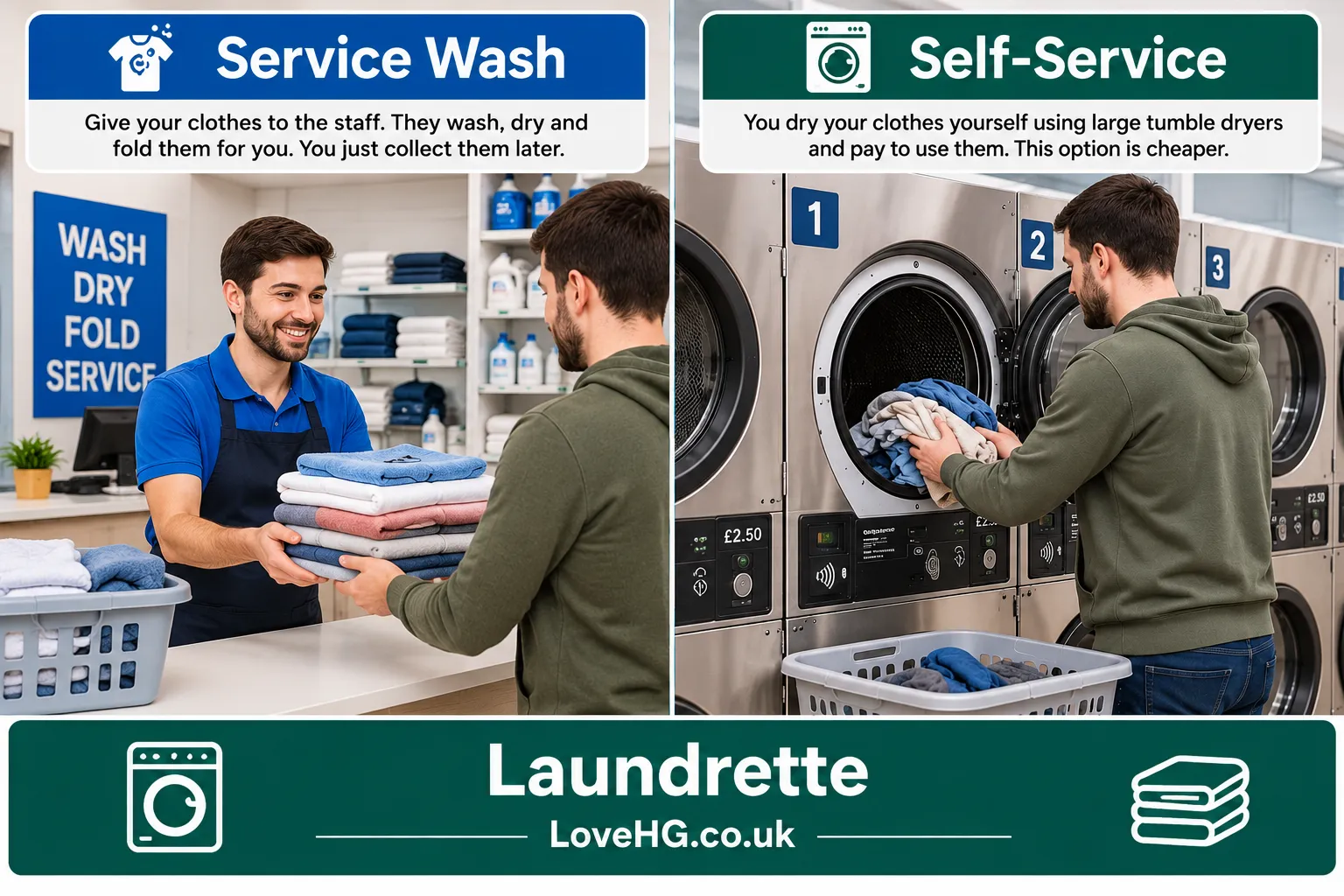
There are two types of laundrette service.
1. Service wash. You give your clothes to the staff. They wash, dry and fold everything, and you collect it later. It costs more because they do all the work.
Typical service wash prices
- Small load (up to 6 kg): around £14–£15.50
- Standard 6 kg load: £15–£25
- Medium load: about £16–£22
- Large load: usually £18–£28
- Extra-large load: roughly £20–£32
2. Self-service. You dry your clothes yourself in large tumble dryers and pay to use them. This is cheaper and usually costs only a few pounds.
Put your wet clothes in an empty machine and choose a heat level: low for delicate items, medium for normal clothes, and high for thick items such as towels and bedding. Pay with coins, card or contactless. The machine runs for a set time, usually 10–15 minutes per cycle.
You can open the door at any time to check the clothes. If they are still damp, add more money and run another cycle. Some laundrettes sell dryer sheets to reduce static and make clothes smell nicer, but they are optional. When the clothes are dry, take them out straight away to stop creasing.
How much does self-service drying cost?
- About £0.50–£1.00 for every 10 minutes of drying.
- A normal load takes 20–40 minutes, so it costs around £2–£4.
- Heavier loads (bedding, towels, bulky clothes) can take 30–60 minutes or more, so it costs around £3–£6.
We hope you enjoyed our article! Leave a comment with your questions, or email us your suggestions. Your feedback helps us improve LoveHG.co.uk for our readers.
See the 10 best indoor washing lines in the UK


One Comment